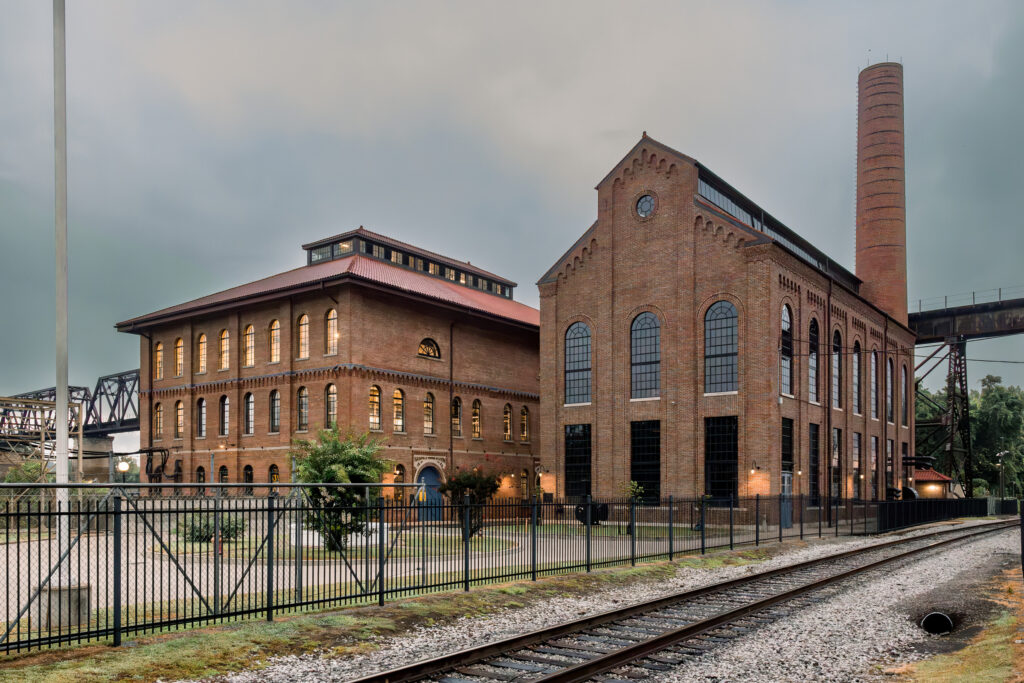
The Sundt project team works through unique challenges to expand the historic Omohundro Water Treatment Plant in Nashville, Tennessee into one of the most sustainable facilities of its kind.
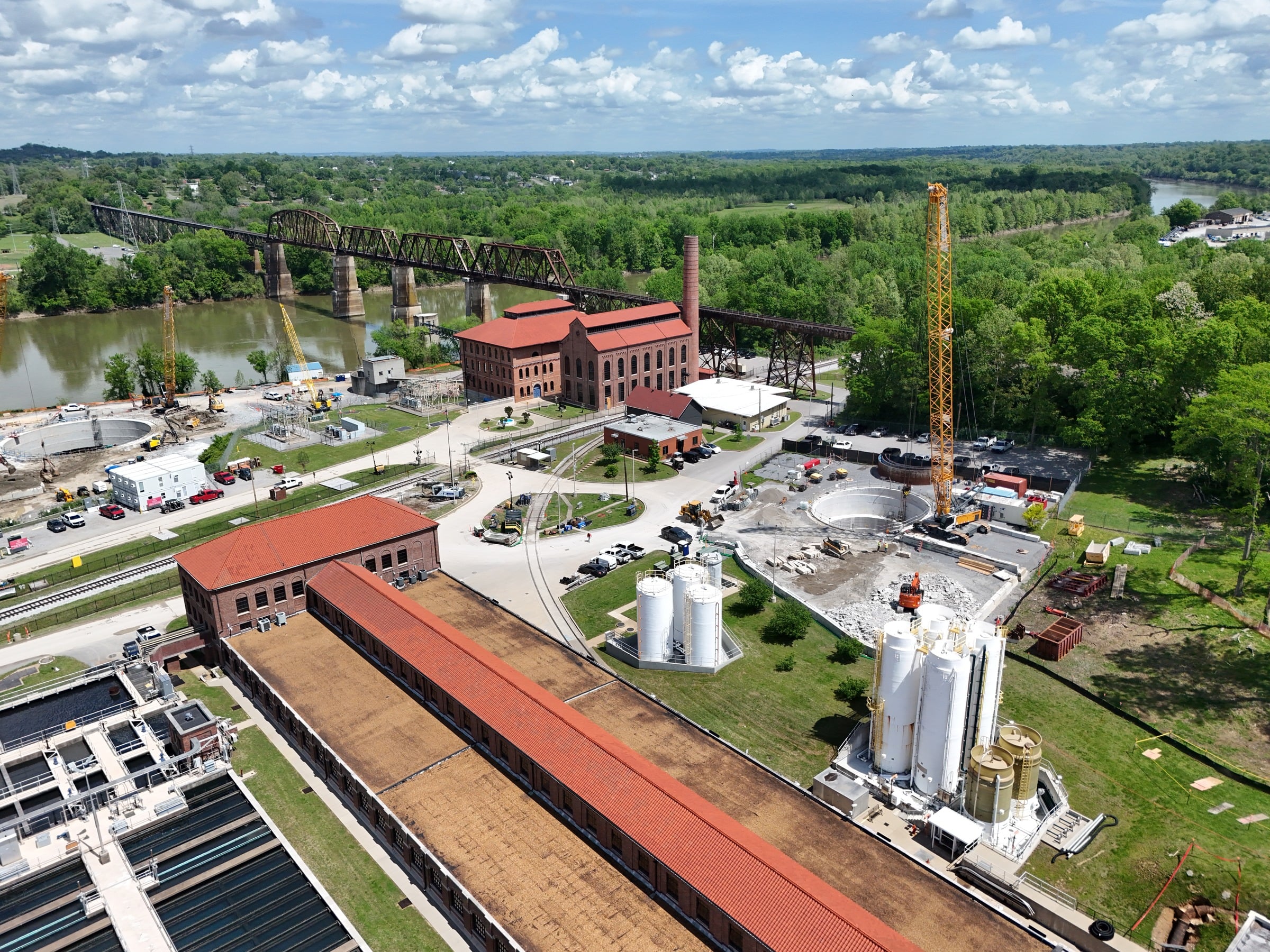
Omohundro is one of two plants supplying clean drinking water to over 700,000 residents in Nashville and Davidson County. The facility dates back to the late 1800s and features Gothic Revival architecture with red brick arches, high ceilings with stained wood details, and expansive windows overlooking the Cumberland River and Nashville’s skyline. It resembles a church or cathedral more than a typical water treatment plant (WTP) with the aesthetics matching the build quality.
As one of the oldest continuously operating water treatment facilities of its kind in the country, it has been essential for the City of Nashville to grow and thrive for the past 100-plus years.
The project scope includes expanding the facility’s treatment capacity to a maximum of 150 million gallons per day, by upgrading equipment through the installation of a new raw water pump station, pretreatment facility, conventional filtration facility, clearwell, finished water pump station and granular activated carbon adsorber facility.
“The expectation is this is a generational project. Metro Water Services wants this to be a beautiful and efficient project. We’re running a facility with components built in the 1800s. And the expectation is we build with the same care for people 100 years from today. That’s a goal we are prepared to meet,” said Sundt Construction Manager and General Superintendent Robert Parker.
The most sustainable plant on the planet
Metro Water Services set a goal and believes Omohundro WTP can claim the title of the most sustainable water treatment plant on the planet when completed. That means pursuing the highest levels of sustainability certifications, LEED Platinum for the occupied spaces and Envision Platinum status for the entire facility. There is no other water treatment plant in the world with both certifications.
130 years from now, we want people to marvel over how well we built this project.
— Metro Water Services
The focus on sustainability shows up in every aspect of the work. Even the trees removed from the site were harvested, milled, and returned for reuse on the project.
As the effects of climate change make access to natural resources more difficult, the team at the Omohundro project work to provide essential services for the future while reducing the impact these facilities have on the environment.
Digging into the unknown
The Omohundro plant sits on challenging soil conditions that vary from clay to rock. This variation made the design of the foundations a challenge, and construction is also a challenge when you encounter varying weather conditions. This clay sits above rock in a thick layer and needs to be dug through to depths of 40 feet in some areas to lay pipe and secure foundations. “You have to be very careful when working in this clay as it is quite easy to get a piece of equipment stuck,” said Sundt Foreman Christopher Emmert.
As one of two water treatment plants serving Nashville, operations must continue uninterrupted during the project. This requires extra precautions due to the surprises you can find when digging at a facility that has been modified over the past 100 years. Essential utility lines and other below grade materials have been discovered when soft digging, which is something that must be done to avoid damaging existing utilities when using mechanical means of excavation.
“Anytime we excavate, we’re not initially using mechanical means. We’re first having to go in and soft dig, to make sure we don’t encounter existing utilities,” said Sundt Project Director Steve Van Loan.
Proper planning, preparation, and skilled crews allow our team to execute despite the challenges. In a true showing of grit and resourcefulness, the team was able to reroute a creek using 4,000-pound concrete barriers normally used on roadways. This enabled access to the work zones and tunneling paths for our tunneling partners, Ward & Burke, to bore through and reach the Cumberland River.
The team oversaw operation of the tunnel boring machines (TBM) to carve out 3,000 feet of tunnels at a depth of 40 feet. The massive TBM has not had any impactful operational problems, had no safety issues to date, and was successfully retrieved from the Cumberland River. The overall tunneling operation took place over a two-year period and 11 separate tunnels, the longest of which was 1,200 feet. The tunnels serve different purposes including the transmission of storm water, carrier piping for raw water, finish water, and utilities.
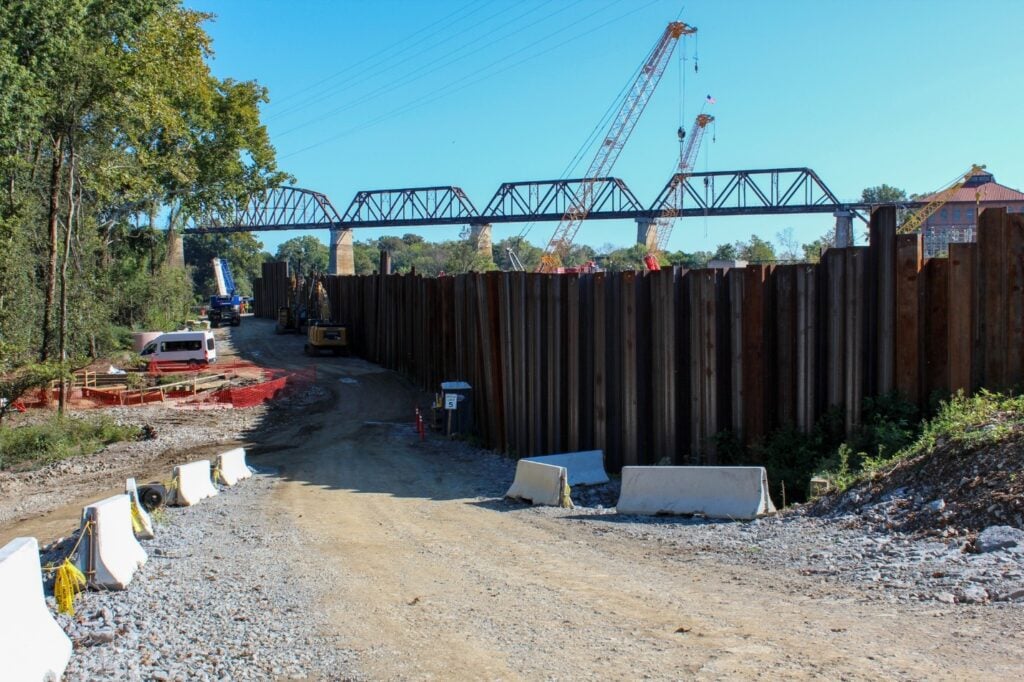
The flood defense wall runs along the bank of the Cumberland River to prevent flooding the worksite.
Defense against the inevitable
Preparing for surprises requires a set of skills and experience to stay calm and work the problem. Preparing for certainties takes steel. The falling and rising of water from the Cumberland River flooded the worksite area multiple times before the team constructed a temporary, 30-foot, steel wall to prevent future flooding.
“That is our flood defense wall. The flooding that was significant in 2010 hit an elevation just two feet below the top of that sheet piling,” said Van Loan.
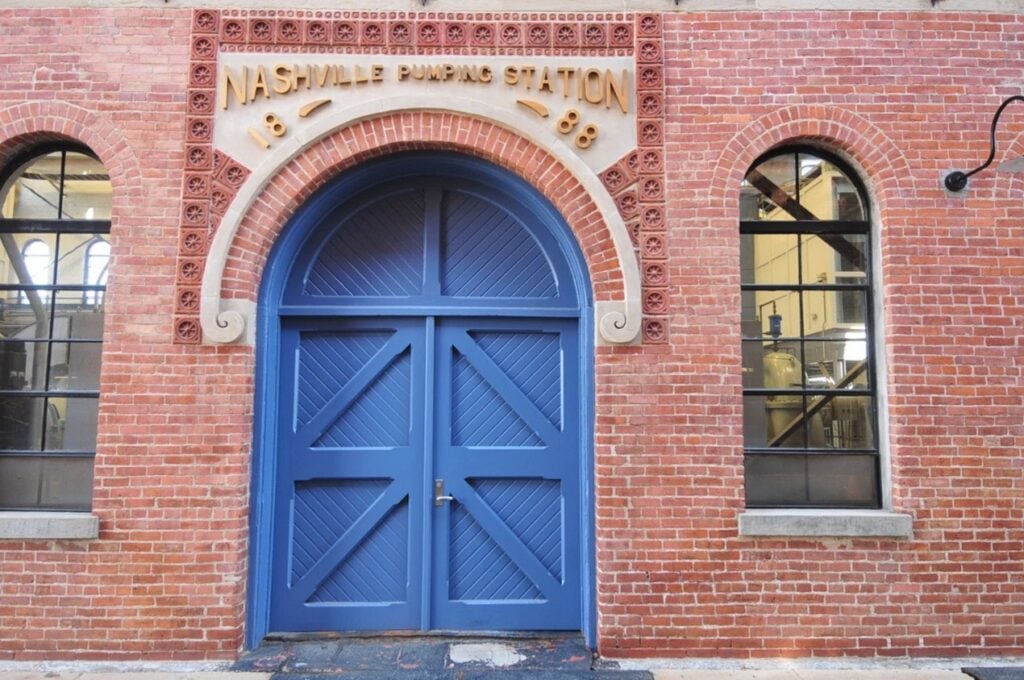
In operation since 1888, the Omohundro WTP is on the National Register of Historic Places.
A historic project and the skilled team to build it
The Omohundro WTP stands as a historic symbol of building for the future. A facility Sundt takes pride in building to continue supplying clean water to local communities for another 100 years.
Read more about the Omohundro WTP and KR Harrington WTP projects.