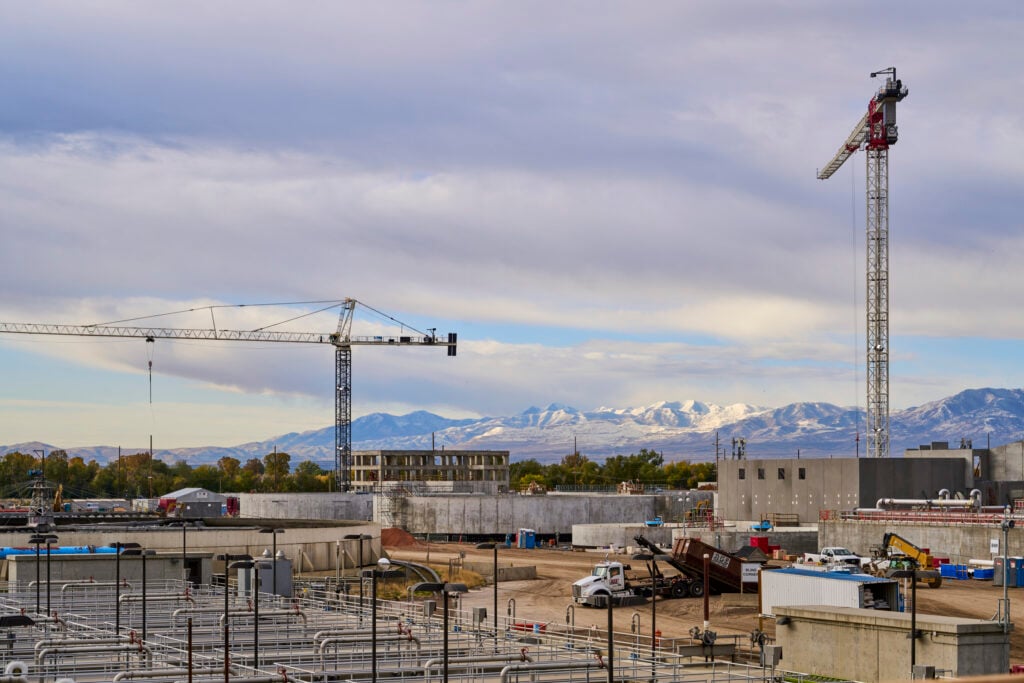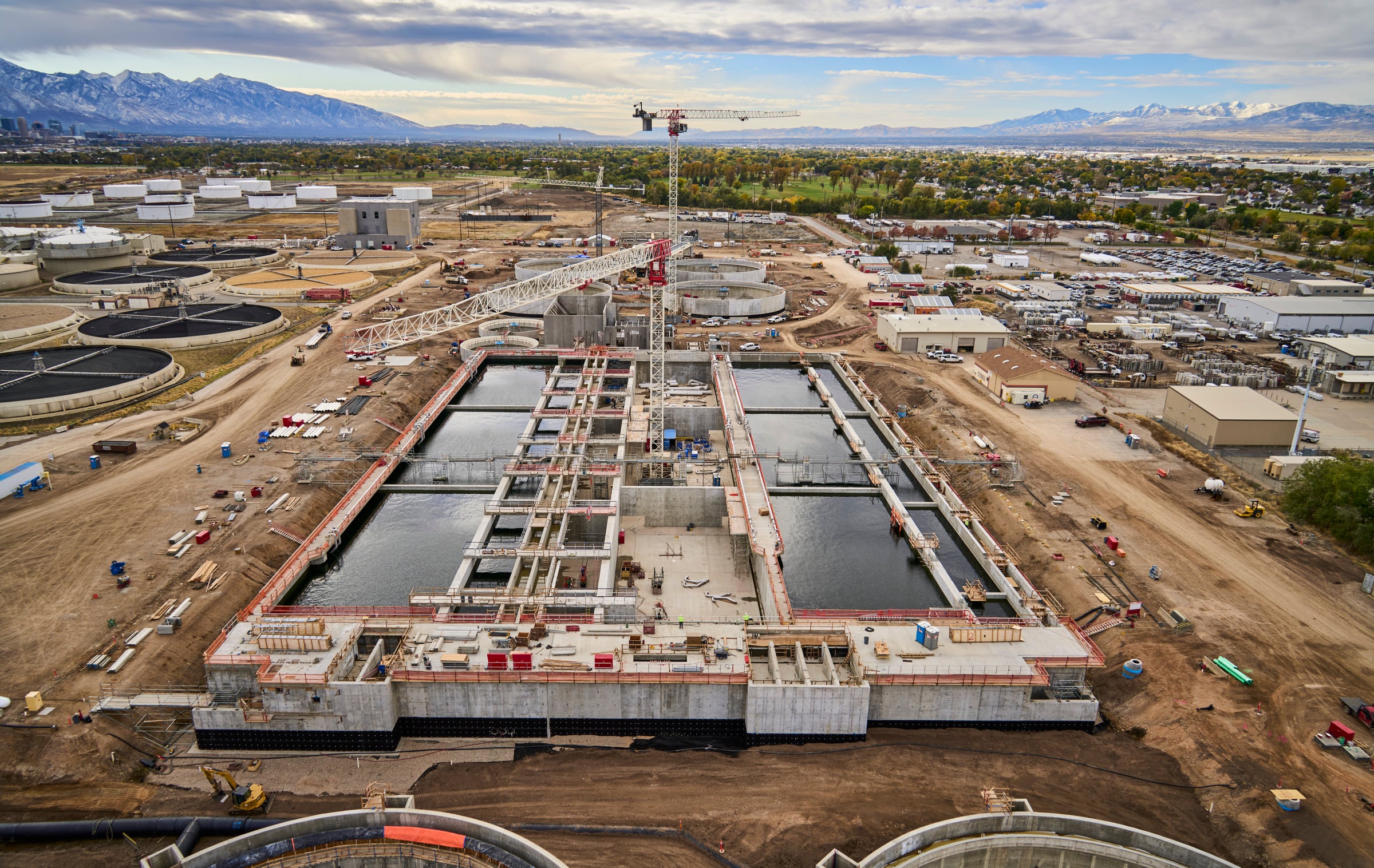
The Sundt/PCL team builds a modern water reclamation facility to keep pace with Salt Lake City’s growth.
Summer jobs give teens their first taste of responsibility and a paycheck. Fifty years ago, when hiring and safety regulations weren’t enforced as strictly as today, a teen could walk up to a construction site and find eight hours of hard labor to gain some extra cash. For Sundt Water and Wastewater Regional Manager Manny Diaz, showing up to a construction site the summer after eighth grade began an incredible career and led to managing one of the largest public works projects ever undertaken in Salt Lake City.
To be clear, Diaz’s first construction job was not on a Sundt project and hiring and safety practices have changed for the better since the 1960s. He was handed a bucket of grout and spent the day sealing pipe joints. Diaz continued working summers in construction throughout high school. In 1972, he attended the Georgia Institute of Technology Civil Engineering School and earned his civil engineering degree in 1976.
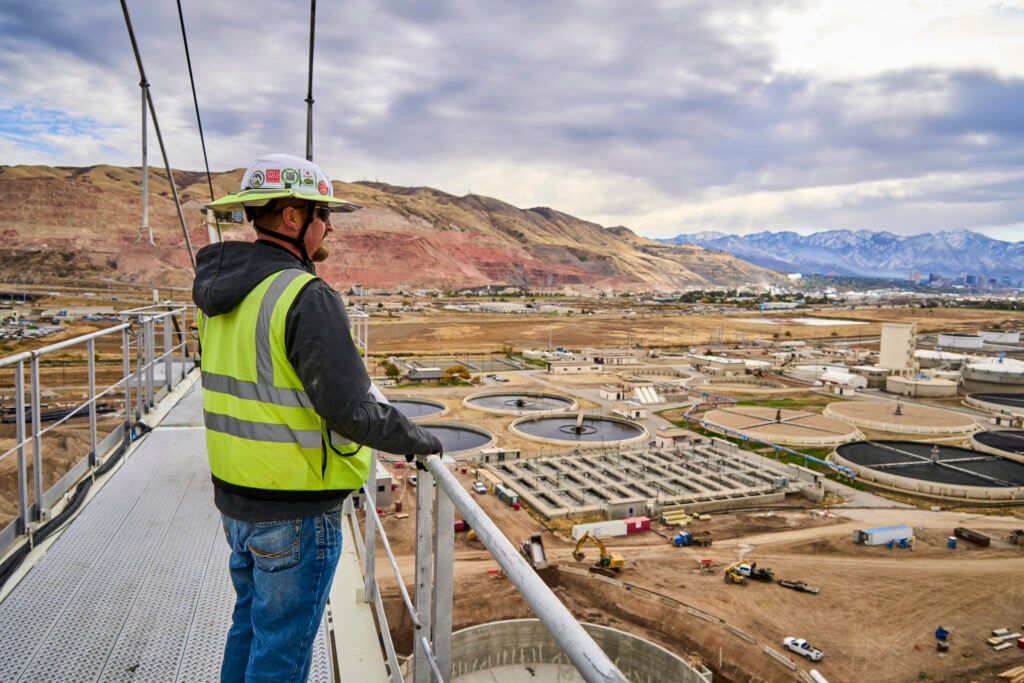
Nearly 50 years later, with experience at 24 wastewater treatment plant and water treatment plant projects, Diaz now leads the Sundt/PCL joint venture building the new Salt Lake City Water Reclamation Facility.
Modernizing a veteran water treatment facility
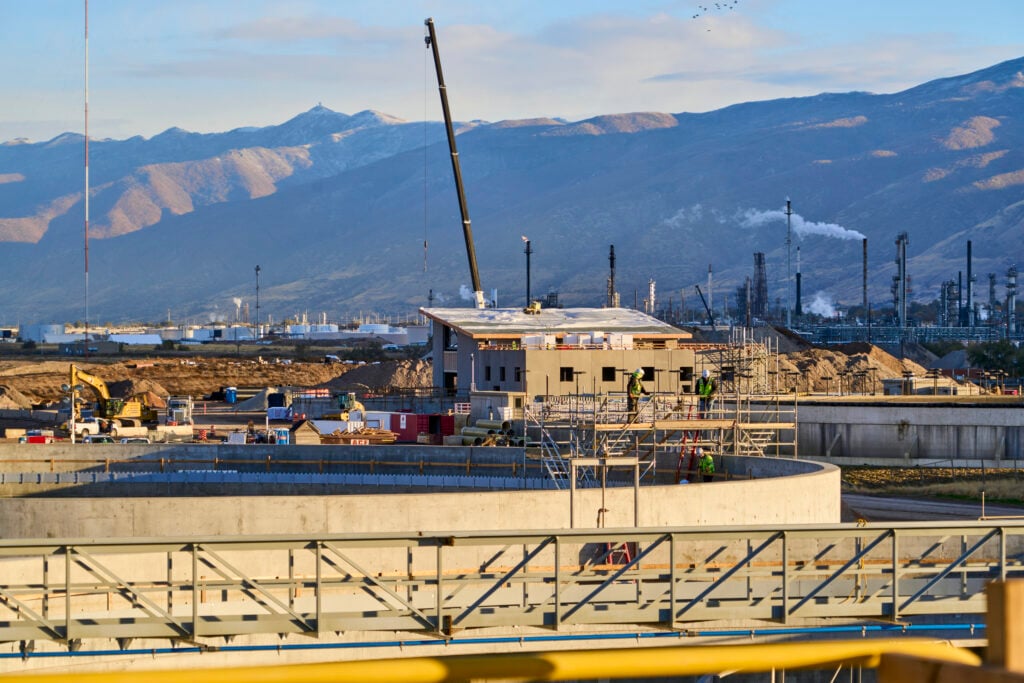
Built in 1965, the current water treatment plant remains the only sewage treatment facility for the city, serving 215,000 residents.
“If the existing plant goes down, nobody can flush the toilet. So, we are replacing the one and only wastewater treatment plant for the city. And we have to keep the existing plant operational while we’re building the new plant,” said Diaz.
Each day, 33 million gallons of water get discharged to the Great Salt Lake. The new Water Reclamation Facility will comply with modern quality requirements and use advanced treatment processes such as biological nutrient removal, UV disinfection, and advanced controls to protect the environment from phosphorus, nitrate, and other contaminants. Additional systems will improve the plant’s efficiency and resilience to seismic activity.
Managing 60 years of upkeep
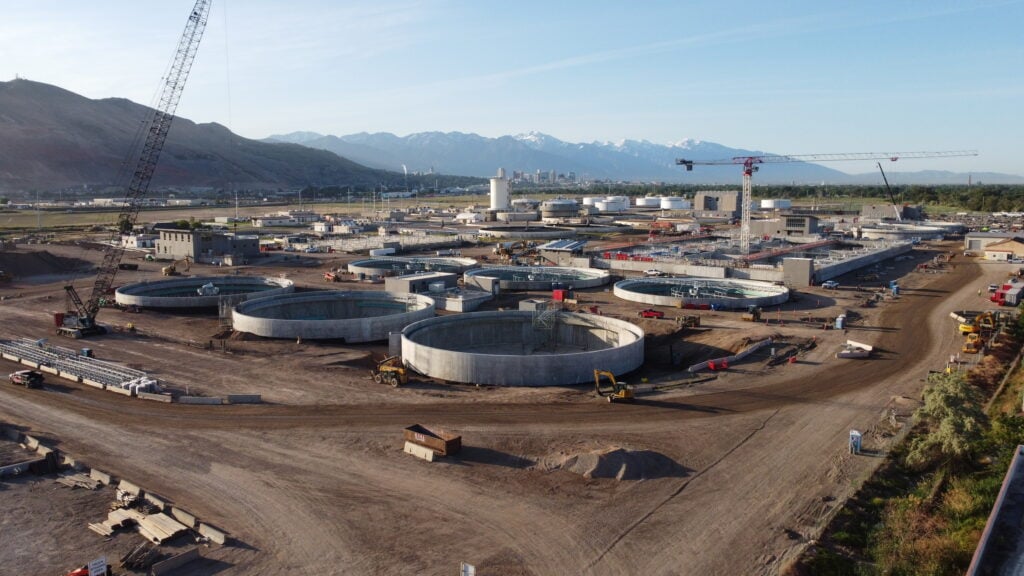
Ground conditions required patience and precision. Salt Lake City has a high water table which can cause issues if not well planned. Working with the geotechnical team, crews surcharged 1.6 million tons of soil across 30 acres for eight months. It was a major effort with little visual change on the surface, but this important step provides long-term stability for the foundation.
Working on a plant with six decades of history also brought surprises. Maintenance records did not always match field conditions.
“When a plant has been operational and upgraded over 60 years, they don’t always keep records of what elevation or what location an 8-inch pipe was placed. Was it plastic? Ductile iron? In some cases, you find asbestos pipe, which is a major headache and requires special handling. The team had to be flexible to adapt to whatever we were finding underground,” said Diaz.
As the project evolved, temporary power from tower cranes was utilized to support building startup activities until the substations could provide permanent site power. Through proactive planning and creative problem-solving, the team maintained the project schedule. The project is scheduled for completion in late summer 2026.
A better plant for decades to come
As Salt Lake City continues to grow, the new Water Reclamation Facility will support more efficient and sustainable water for the future. For Diaz, replacing aging infrastructure with a state-of-the-art facility marks another accomplishment in a long career of improving communities.