
The demand for updated airport infrastructure shows no signs of slowing down. With many major airports primed to make significant investments in existing structures over the next 10 years, builders require the experience and capabilities to deliver modern, functional and efficient aviation infrastructure. Sundt knows what it takes to build and partner with transportation and airport authorities to complete a successful project in today’s dynamic environment.
Collaborative Delivery and Engineering Flexibility
Over the past decade of aviation construction, collaborative delivery methods have been gaining ground on the traditional design-bid-build model. Progressive design-build and construction manager at-risk (CMAR) projects continue to stand out as the most flexible option for the aviation market. Other delivery methods can isolate the design or set it in stone too early, leaving little room for change without incurring major costs. In the progressive design-build and CMAR models, contractors, owners and designers have the time and flexibility to solve challenges together.
With construction set to start in early 2027, Sundt was selected to provide progressive design build (PBD) services for the San Diego County Regional Airport Authority on the new Terminal 2 East Connector. This two-level connector project includes an employee security checkpoint, landside concessions, new airside security barriers, apron improvements and landside improvements. The second level includes a secure pedestrian walkway between the terminals, two new gate hold rooms, and passenger boarding bridges. Our team was selected for our ability to collaborate with the Authority and develop creative solutions to challenges alongside the project’s design team.
Effective Planning, Tracking, and Management of Federal Grant
As airports consider how to fund improvement projects and since federal grant planning begins at project initiation, it’s increasingly important to hire a firm well-versed in identifying and managing grant-eligible scopes of work. Working closely with airport personnel and in coordination with the local FAA office, a strong project team will help define “eligibility buckets” based on anticipated FAA funding strategies, scope eligibility criteria, and phasing needs. These buckets should be grounded in FAA guidelines and reinforced with an eligibility plan that outlines the specific cost breakdown and funding ratios.
Because FAA grant planning is often dynamic—subject to ongoing reviews, fiscal year allocations, and phasing adjustments—Sundt approaches this as an iterative and collaborative effort. Our process allows for refinement of eligibility breakdowns and cost divisions as design matures, funding windows evolve, or program goals shift.

Cross-Market Experience
Airports function like miniature cities. Beyond terminals and runways, they have their own transportation networks, utilities, communications, and in some senses, even their own economies. Selecting a builder with experience in both vertical and horizontal construction offers major advantages to the client. Additionally, partnering with a contractor with experience in areas like power, water treatment, solar and flood control allows airport project teams to go even further in consolidating decision-making and streamlining critical-path scopes.
For Sundt, our diverse range of work adds value through shared knowledge and self-perform skills. Our team of skilled craft professionals and our expert operations leaders support owners in balancing project goals alongside schedule and budget limitations, without sacrificing safety or quality. This integrated approach allows us to deliver innovative solutions built on proven experience.
This strong experience across multiple disciplines has been critical in planning for the recently awarded. The scope of this project includes the construction of major utilities like water, drainage, power supply, electrical duct banks, communication systems, FAA duct banks and natural gas. Sundt’s cross-market expertise will allow our team to better manage interconnected scopes, identify conflicts early and manage the project’s phasing.
Self-Perform Skill and Trade Partner Relationships
Across the nation, construction projects face a shortage of craft workers. The margins for a successful project may come down to simply having the staff available to complete the job. Sundt mitigates this risk with our workforce development and training opportunities. For decades, we have been committed to the growth, safety and improvement of craft professionals through apprenticeships and other training.
Our self-perform capabilities include critical-path work like concrete paving, structural concrete, structural steel, excavation and grading, underground utilities and drainage systems. For flat work specifically, we can pave surfaces more than 40 feet wide for roadways, runways, taxiways and aprons, as well as barrier elements.
For the projects and trades where we don’t self-perform, Sundt approaches major scopes as if building them ourselves. We work with our trade partners as an extension of our project team, specifically in how to approach safety, scheduling, and BIM modeling. This leads to a shared understanding of project challenges. We don’t let problems sit until our subcontractors encounter them in the field; we build with a culture of solving issues before they become problems.
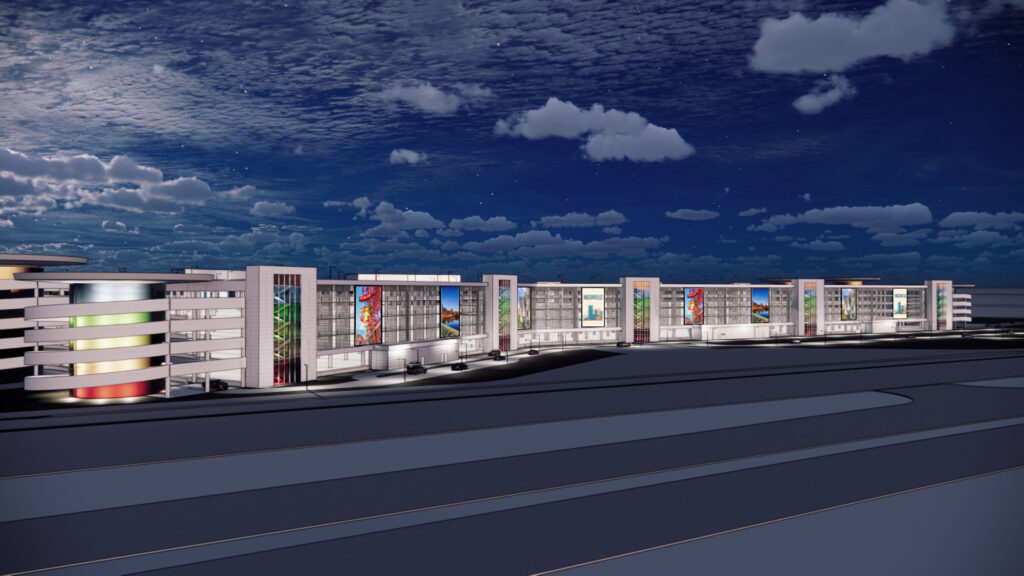
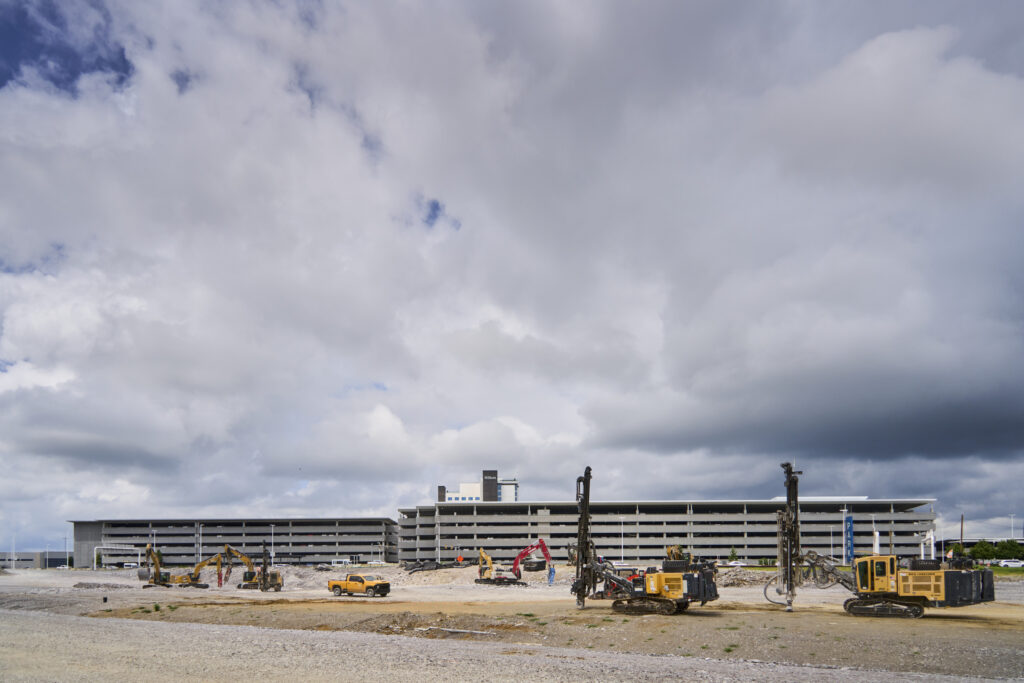
Sundt and joint venture partner Messer Construction are currently working together on a progressive design-build for Nashville International Airport (BNA)’s CONRAC program. The project will improve the airport’s rental car complex, parking garage, and a portion of the airport’s roadway system. The project will also improve the airport’s Terminal Drive “loop road” to ease traffic congestion and enhance roadway connections. With so many project elements requiring close coordination, the anticipated approach takes advantage of the team’s self-perform capabilities to deliver key scopes. This method allows for greater control over how the work is planned, sequenced, and delivered. The extra control helps improve costs, schedule, and quality support through construction.
Mastering these skills will support project success for airports and aviation authorities. We’ve embraced the challenges presented by the ever-changing industry because finding new approaches to meet and anticipate the needs of our clients is what we do best.
Learn more about Sundt’s aviation projects.

