Data center projects need to move fast, or they can become obsolete before they open. Combining state-of-the-art technology, advanced water systems, cooling capacity, power, and backup generators takes a team working as one. There is no playbook, no room for mistakes.
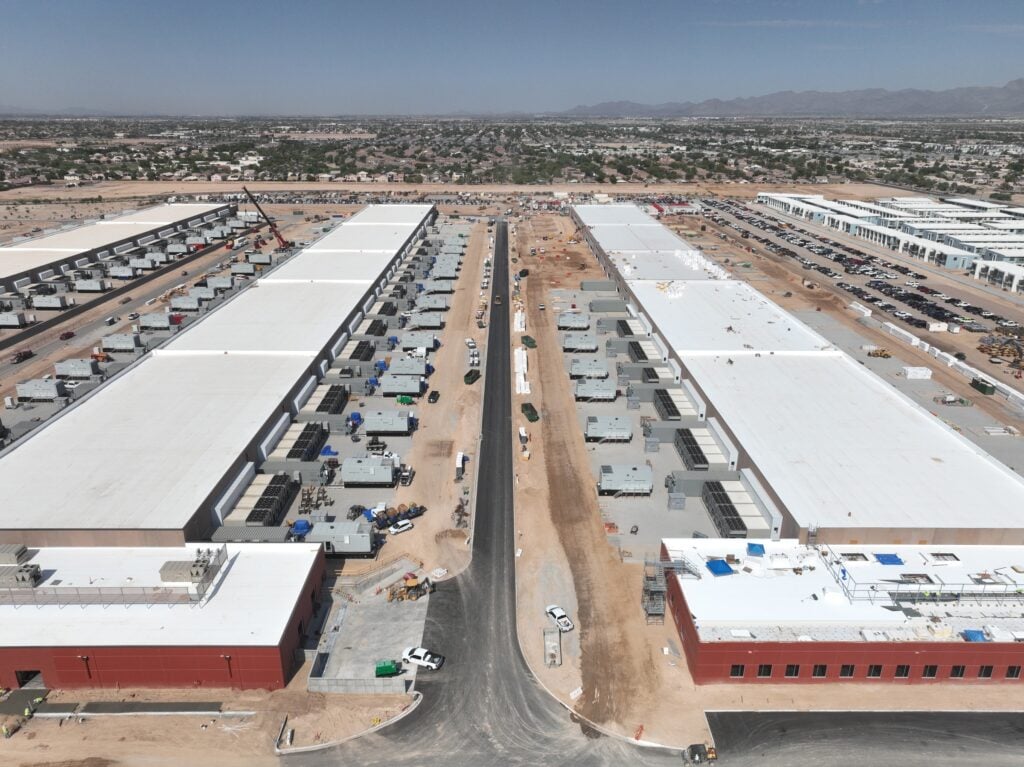
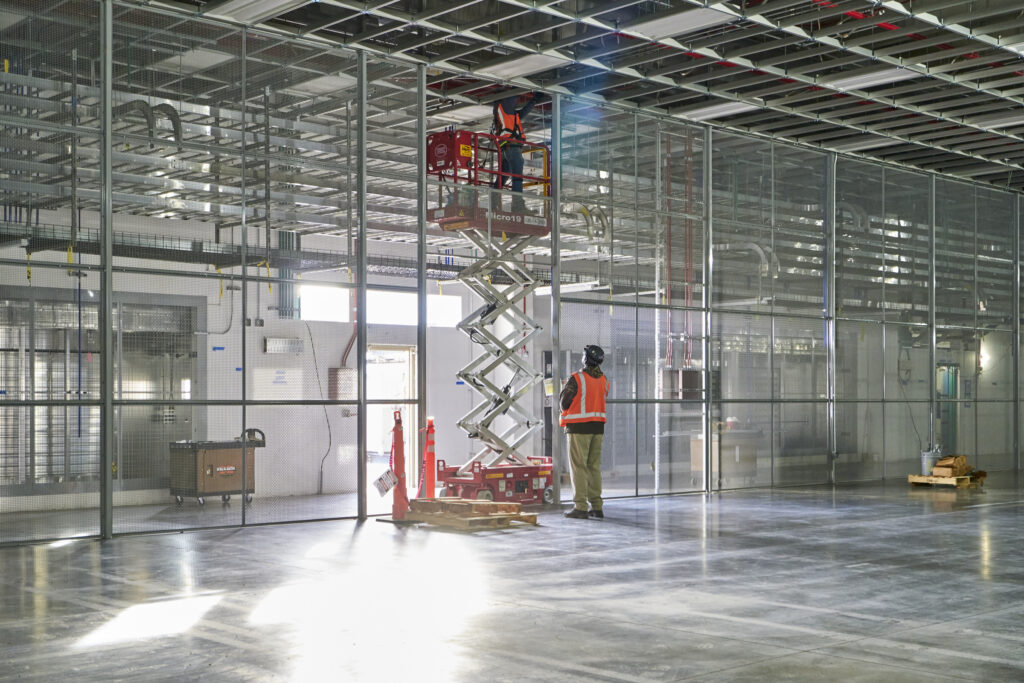
On the outside, data centers look similar. Large warehouse buildings with very few windows any builder could copy and repeat. But inside, the raceways of wires, pipes, electrical stations, and secure rooms resemble a large sci-fi city. The U.S. has 4,149 active data centers and 2,788 more under construction or announced, according to an American Edge Project and Technology Councils of North America report. By the time one data center gets completed, the next build can require completely different equipment and systems.
A team built for the future of data center construction
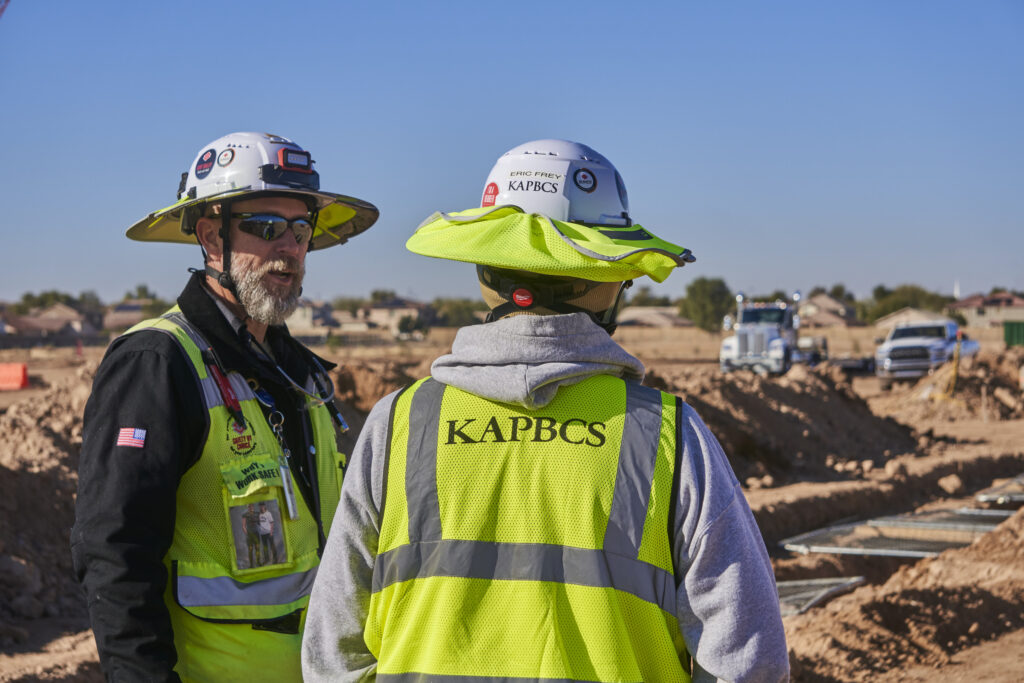
Sundt Sr. Project Superintendent Randy Stromstad has been building data centers since the late 1990s. He knows what it takes to get a facility up, tested, and running. For the last seven years, he has led a team building the latest technology and systems for a 190-acre, 240-megawatt campus for a new kind of data center. The six buildings measure approximately 250,000 square feet each, without any connections going through the roof or floor.
“This client’s build is different than what most do, everything is a first of a kind. We figured out what wasn’t working well and found better solutions. It took a lot of lessons learned,” said Stromstad.
Those lessons come from solving the hard problems by hand. Having reliable self-perform teams brings incredible value to data center construction that doesn’t always show up in the spreadsheets.
Executing innovations until they’re bullet-proof
New approaches may look good on paper, but they only become innovations when they work. With in-house expertise in concrete, building, advanced water systems, mechanical, electrical and plumbing (MEP), and commissioning, our teams learn and adapt as data centers change. For data center clients, that means fewer assumptions and more certainty. Some innovations our self-perform teams have already helped achieve include improved cooling, stronger foundations, and more sustainable techniques.
Artificial intelligence workloads drive higher rack densities, so Sundt teams are installing new liquid cooling systems and hybrid units that can operate in air-cooled or liquid-cooled modes. These systems use coolant distribution units to transfer heat between two separate liquid loops, creating a more efficient solution for high-performance computing environments. “We’ve learned how to manufacture and install full pieces of pipe with fewer clamps and more solid pieces of stainless steel. Anytime you have a clamp, you have the potential for failure. You don’t want to leak water on a $400,000 server that’s computing millions of dollars a day,” said Stromstad.
You expect high-tech servers and megawatts of power generation to improve through innovation. But our teams look at every aspect of the project that some clients might not even know can be done differently. On a major data center project, our in-house concrete team poured approximately 1.5 million square feet of concrete for the foundation. To improve strength and reduce the amount of steel rebar required, the team developed a method using millions of Kevlar fibers added to the concrete mix. This saved time and reduced the amount of concrete and rebar required for the massive foundation.
New approaches also helped support the project’s sustainability goals. Sundt’s in-house concrete team used a novel process called CarbonCure. This injects captured carbon dioxide into the concrete mix, where it mineralizes into calcium carbonate. The process improves compressive strength, reduces cement demand, and permanently stores the carbon dioxide in the concrete. Every cubic meter of concrete produced using CarbonCure saves approximately 37 pounds of CO2 emissions, making this method one of the most effective carbon capture solutions available in construction today.
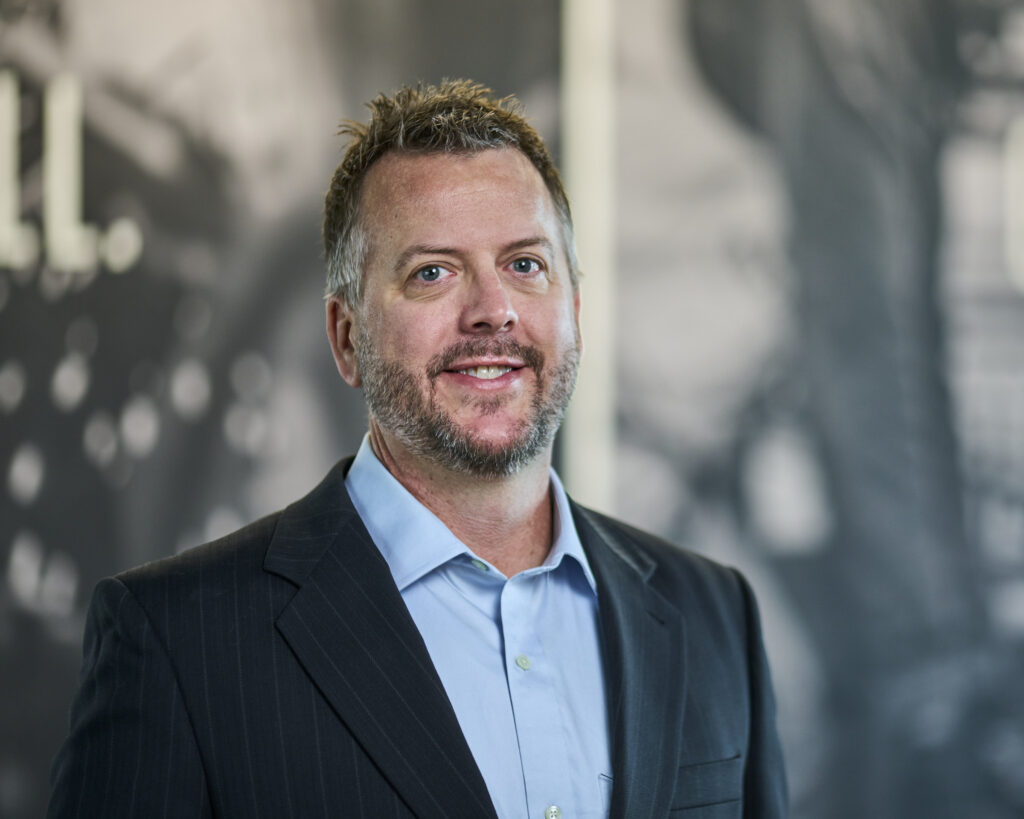
“When you take ownership of a project and self-perform key scopes, it provides opportunities to learn and sparks new ideas. We are always trying to improve and find better ways to build more efficiently, more sustainably. I’ve seen our teams solve problems in the field and bring those solutions to make the next build even better. We use skills development and execution certainty to keep pace with our clients. We’re more than a builder, we’re a partner,” said Josh Anderson, Sundt Data Center Market Leader.
Quicker, modular, faster, safer
A data center gets measured in megawatts, not size. When an experienced team can find efficiencies in power systems, it has a waterfall effect for the efficiency of the entire facility. When that team brings their curiosity to projects, it creates a similar waterfall effect for improving and finding innovative solutions. It allows for new ways to create efficiencies, improves speed to market, reduces risk, creates safer and more sustainable ways for first of their kind facilities.
AI and computing power may bring great advancements for the future. But when our skilled self-perform teams at Sundt partner with clients who want to build more efficiently, more sustainably, and more creatively, it benefits the current project and future data center facilities.
Learn more about how we construct data centers.