Construction Manager at Risk (CMAR) has become a preferred delivery method for water and wastewater projects because it brings owners, engineers and contractors together early to solve problems before construction begins. The benefits are well documented: improved cost certainty, better schedule development, and greater collaboration during design.
Yet anyone who has worked on multiple CMAR projects has seen very different outcomes. Some projects move through construction with transparency and shared problem-solving. Others experience delays and finger-pointing, despite having the same procurement process and contractual framework.
If the delivery method is the same, what makes the difference?
In my nearly 20 years in the industry, I’ve found the answer often has less to do with technicalities and more to do with the relationships that develop after the contract is signed.
CMAR Creates Opportunity
Owners, engineers, and contractors make hundreds of decisions together throughout construction. The CMAR contract defines each party’s responsibilities, but it cannot dictate how those decisions are made or how challenges are addressed. Plus, every stakeholder approaches a project with legitimate priorities.
Owners are responsible for budgets and public accountability. Engineers are committed to protecting the integrity of their designs. Contractors must manage risk while delivering quality work safely and efficiently.
But those priorities aren’t the problem. Projects begin to struggle when protecting individual interests becomes more important than protecting the project itself. Communication might slow down. Teams could become reluctant to share difficult news, leading to expensive issues because they aren’t addressed early.
It’s easy to pin this on the delivery method itself, when it’s the relationship that has failed.
Technical Challenges Are Inevitable
Construction projects will always face technical challenges. Unexpected utilities, permitting issues, material lead times, unforeseen site conditions, and design clarifications are part of our industry. Relationship issues, however, don’t have to be one of those.
The strongest CMAR teams approach those challenges with a shared mindset: Does this help deliver a safe, on-time and on-budget project for the owner?
That shift changes how teams communicate and make decisions. Conversations happen earlier, risks become visible sooner, and owners have the information they need to make timely decisions.
The result is a team focused on protecting the project rather than individual interests.
Trust Is a Project Management Strategy
Research supports what many experienced project teams have already observed firsthand.
Studies published by the Construction Industry Institute, the International Journal of Project Management and the Journal of Management in Engineering consistently show that projects with higher levels of trust experience stronger communication, greater collaboration, increased innovation and improved overall project performance. Conversely, deteriorating relationships are associated with higher costs, schedule delays, quality issues, and increased disputes. ¹
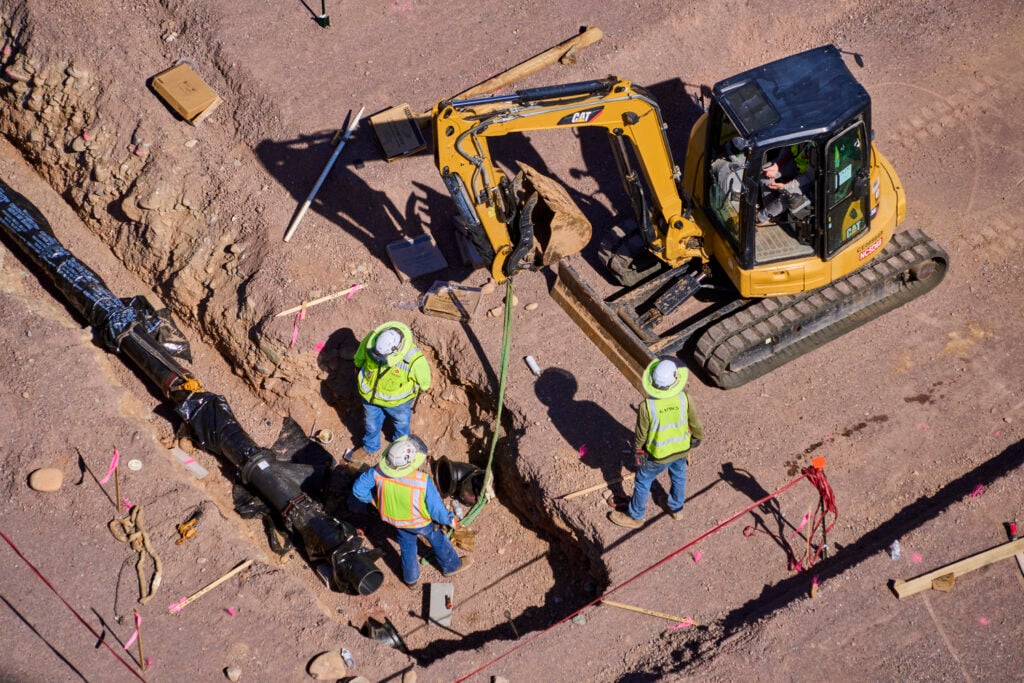
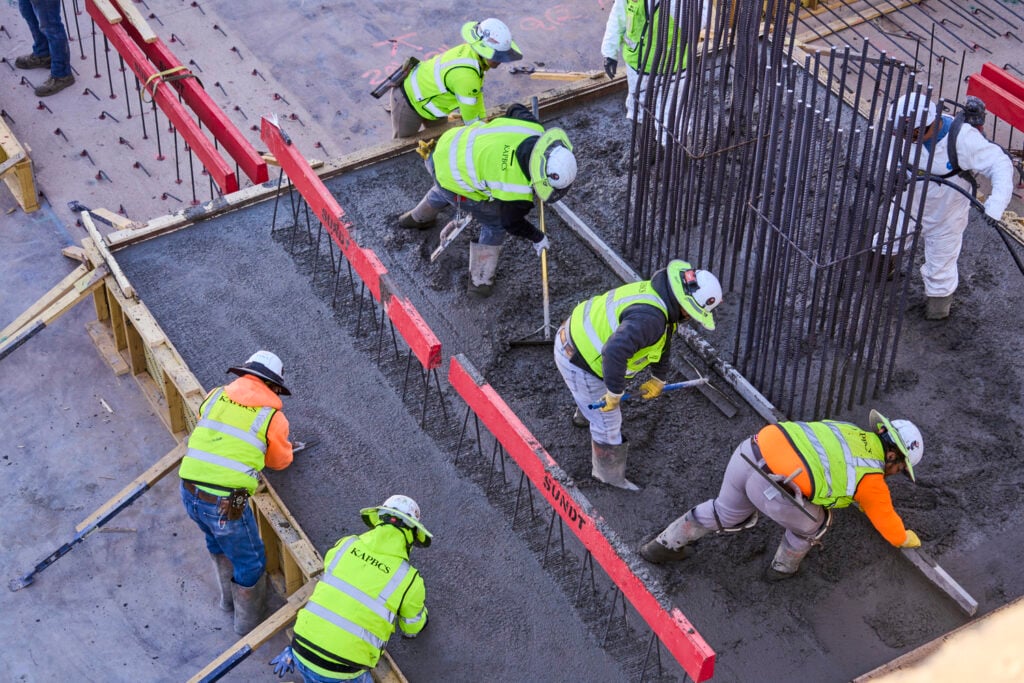
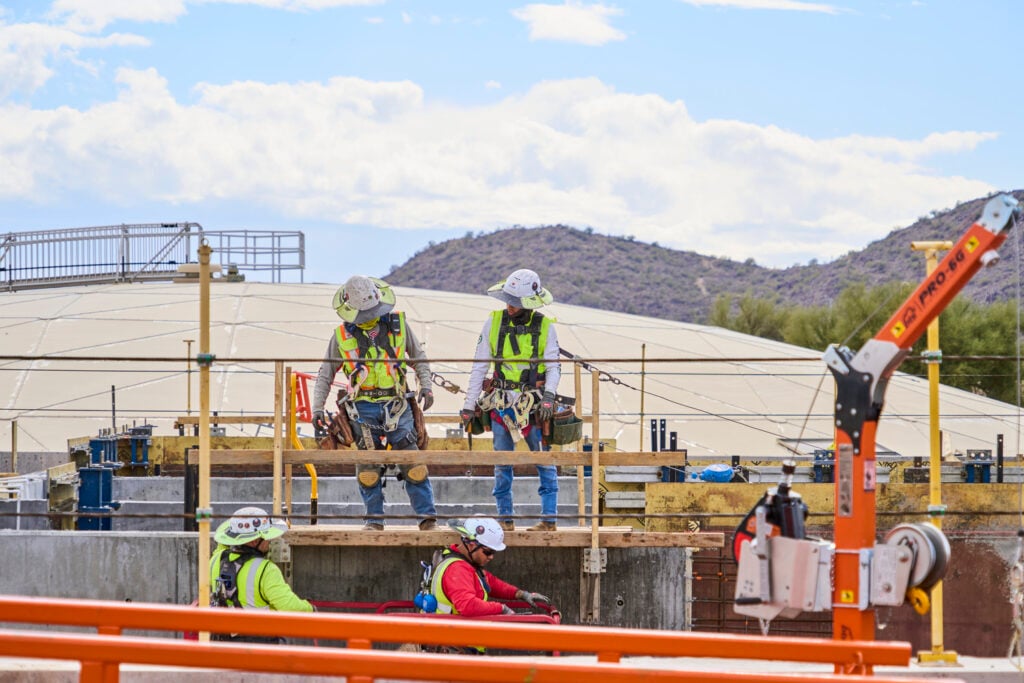
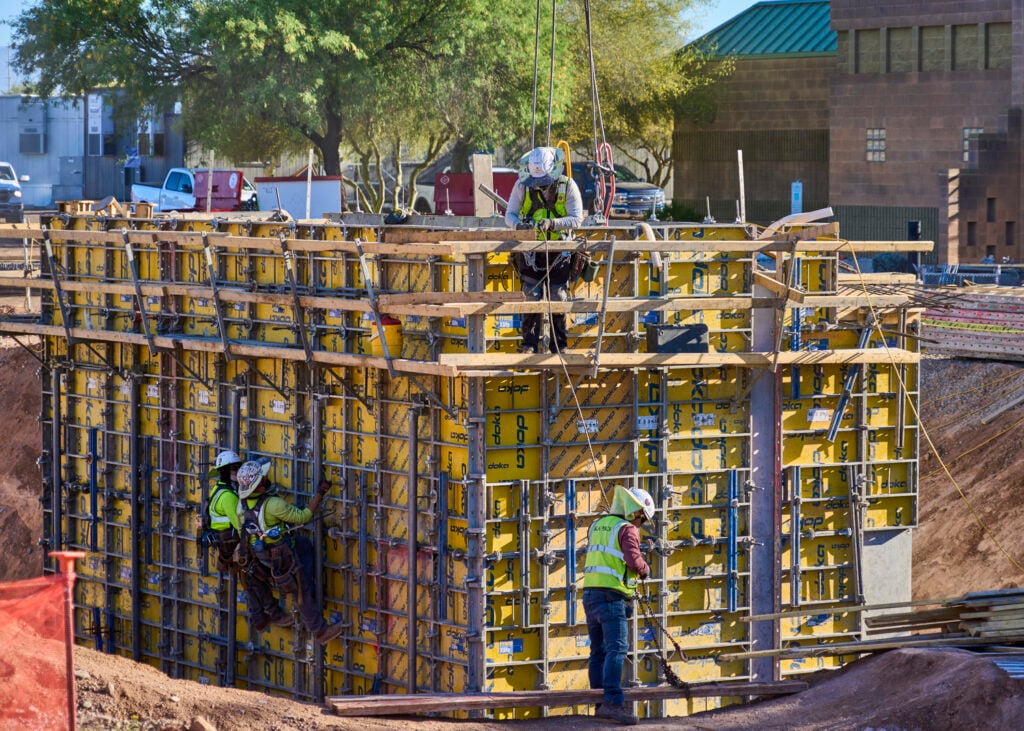
I’ve found this to be true in the field. On the City of Phoenix’s Cave Creek Water Reclamation Plant Rehabilitation, our relationship with the client and engineers Black & Veatch is aligned around delivering a successful project together. No egos, just trust built on communication and collaboration.
These examples reinforce that trust is not a cultural aspiration or a “soft skill,” but a measurable contributor to project success. I often think of trust as a multiplier. It doesn’t replace technical expertise, rather it allows technical expertise to reach its full potential.
Relationships Predict Results
CMAR provides an exceptional framework for collaboration, but collaboration isn’t guaranteed simply because a contract requires it.
Strong relationships have a ripple effect throughout a project. Integrity builds trust and trust encourages honest conversations, leading to better solutions and earlier decisions. Ultimately, those outcomes benefit not only the project team, but also the communities that depend on the infrastructure we’re building.
As our industry continues to deliver increasingly complex water and wastewater projects, technical excellence will always remain essential. But the projects that consistently achieve the best outcomes are often distinguished by something less tangible: teams that communicate openly and solve problems together.
¹ Research referenced from the Construction Industry Institute (1993); International Journal of Project Management (2004, 2012); and Journal of Management in Engineering (ASCE, 2016).