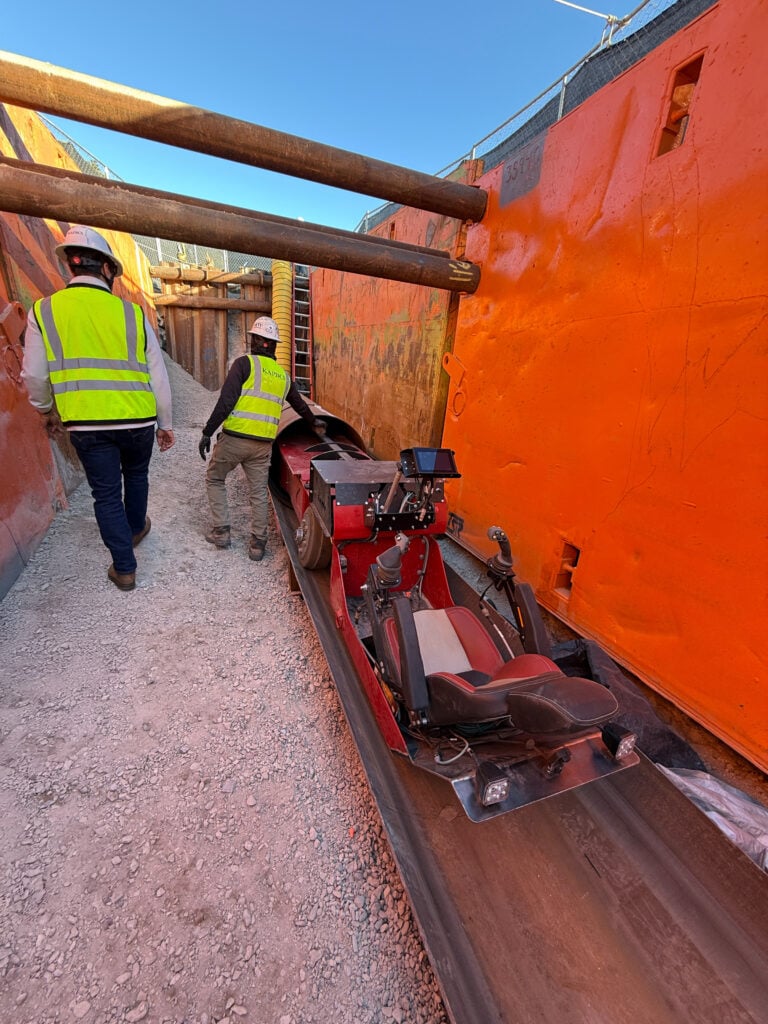
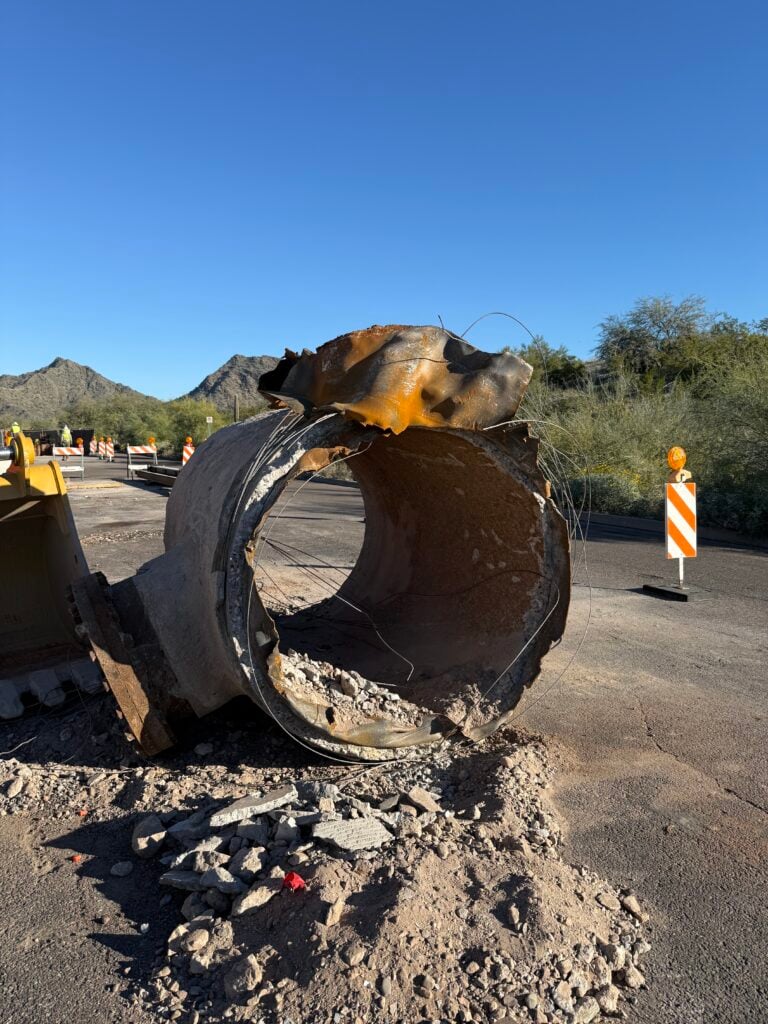
In construction, a workplace can mean almost anything: a desk covered in plans, the controls of a bulldozer, a boardroom presenting to decision makers, or the rooftop of a newly completed building. No two employee-owners have the same “office.” But the operators on the Scenario 3B jobsite take this idea to a new level. Their workdays are spent climbing into a custom vehicle that takes them through pipes that run under busy Phoenix streets, traveling to install new infrastructure from the inside. What started as a concept sketch to approach the difficult task of sliplining transmission mains has turned into an innovative investment in water main rehabilitation.
Sketching Out a Solution
Spencer Brinkerhoff, Proposal Graphic Design Manager for the Water & Wastewater Group, receives urgent requests to create artwork regularly. His illustrations have even been featured in official Star Wars products. When the opportunity to propose for the Scenario 3B project with the City of Phoenix arose, the team knew they needed a pipe cart to rehabilitate and install about a mile of water transmission pipeline without needing to dig up the full length of pipe. The Scenario 3B project consists of the rehabilitation and installation of about a mile of water transmission pipeline for the City of Phoenix.
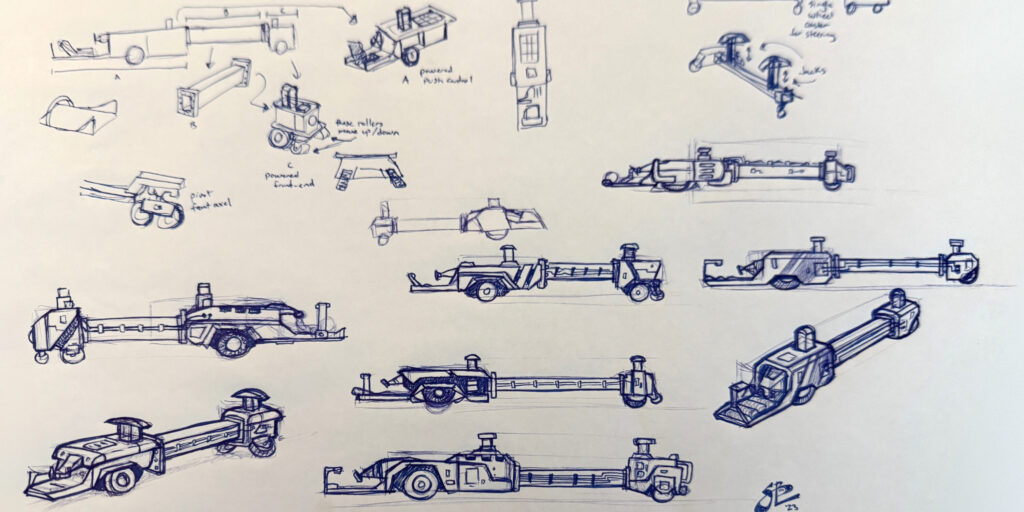
The problem: Sundt didn’t have a pipe cart that would work for this project and would need to design one from scratch. The project team approached Brinkerhoff during the proposal phase to sketch out what the cart might look like.
“The team said, ‘Spencer, this is what it’s supposed to do, give it a shot,'” said Brinkerhoff. “I’m not an engineer, I’m not an architect, I’m an illustrator, but I can do a little bit of everything.”
Vehicle Requirements for Scenario 3B Project:
– Electric, no fumes
– Specific type of battery system
– Wheels suited to travel inside a pipe
– Hydraulics needed to lift and drop the vehicle into position
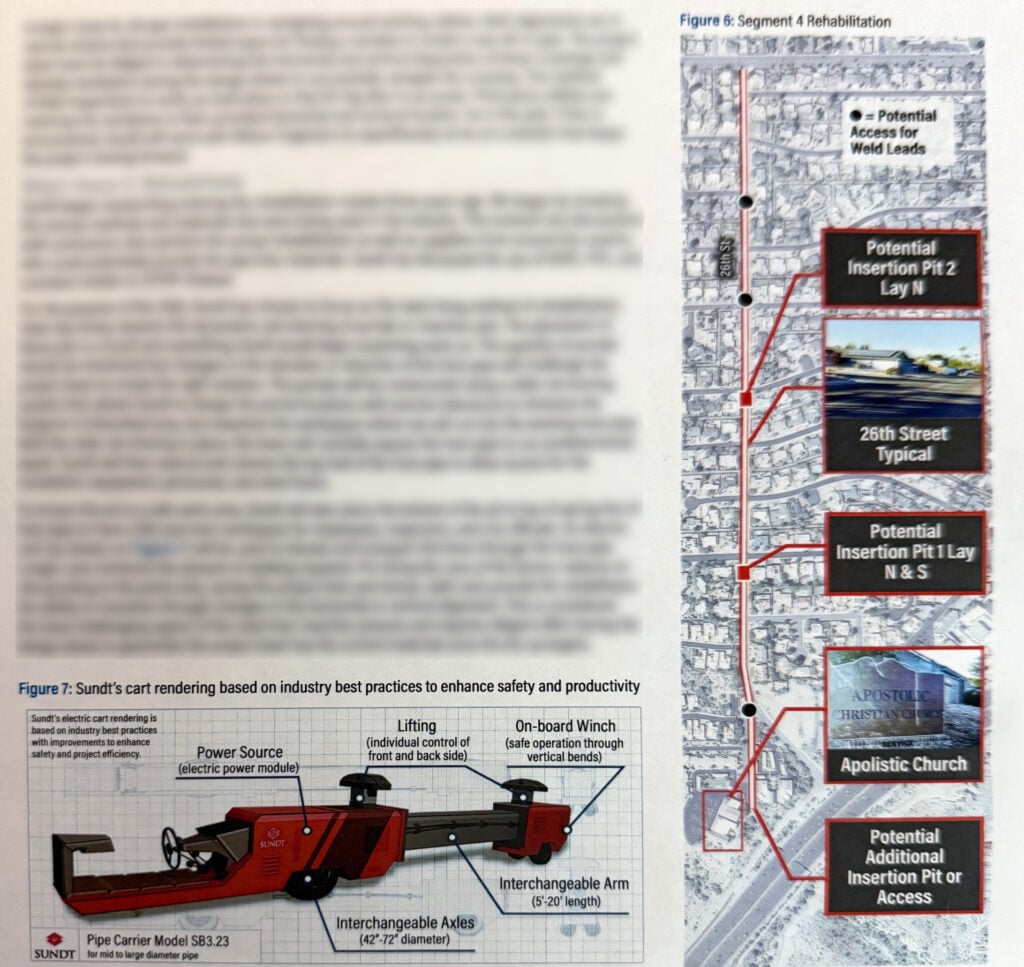
Based off those few must-haves and some research on similar vehicles, Brinkerhoff got to drawing.
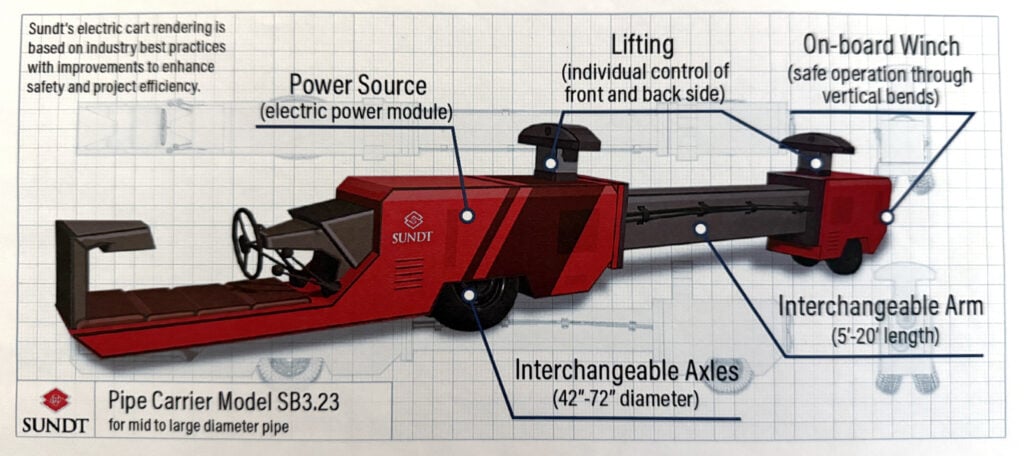
His original drawings were visualized into a proposal graphic that aided in winning the team the project- and served as a basis for the design of the actual custom vehicle used on the project.
A One-of-a-Kind Solution for Phoenix’s Aging Water Infrastructure
The project’s pipes measure 48 inches in diameter and are made of prestress, cylinder concrete pipe. These rehabilitation efforts are a priority for the city, as water infrastructure is rapidly aging across Phoenix.
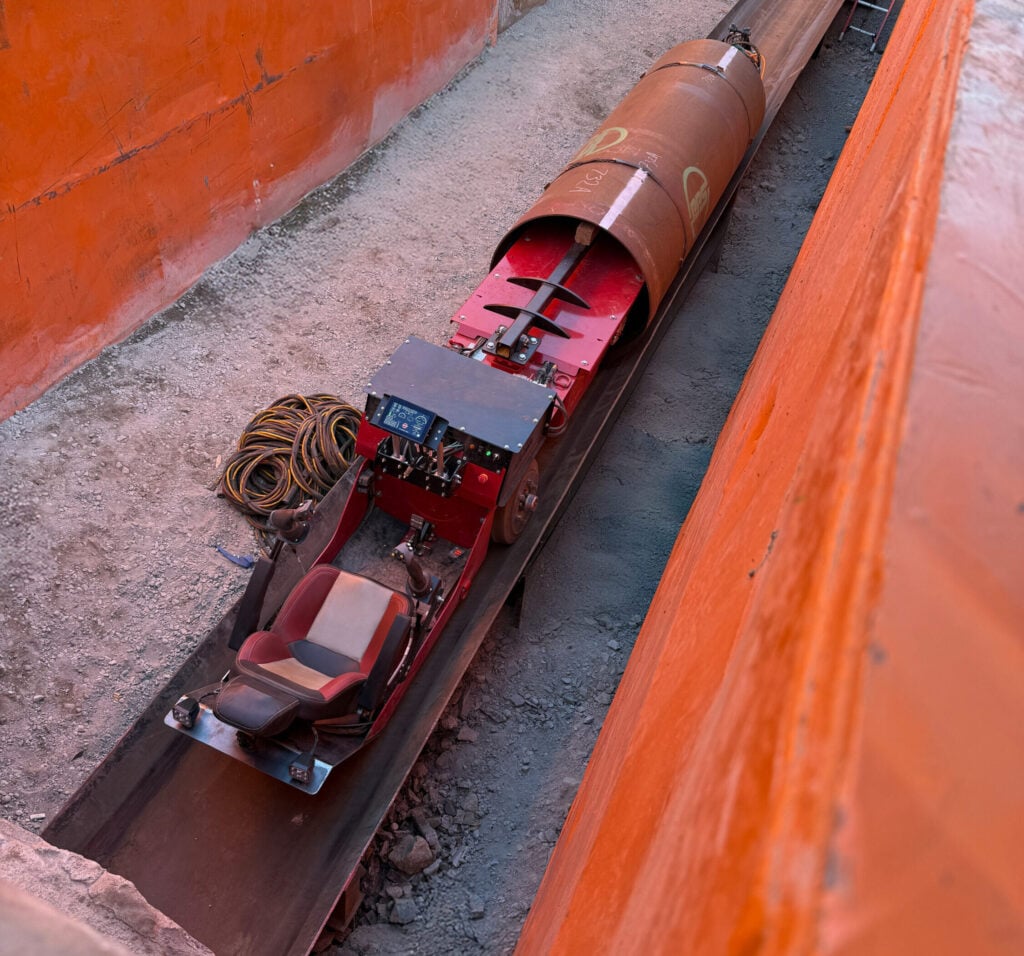
Using the unique, powered car is essential as there is no other safe way to maneuver the new pipe inside of the existing carrier pipe.
“It’s a newer thing in the industry, and very new to us,” said Jose Gamez, project manager.
It’s the first vehicle of its kind to be used on a Sundt project. The team worked with a manufacturer in South Dakota to create a prototype for their vision based on the original proposal drawings, then tailored the car to meet the specific needs of the project.
The Right (Sized) Team for the Job
Due to the small size of the pipes, the carts can only be used by operators small enough to fit through the tight spaces.
“A custom build was essential for success of the project,” said Gamez. “From very early on, we designed the ergonomics of it to fit the size constraints of the pipe.”
Three operators selected to be the designated cart operators were flown out to South Dakota to meet with manufacturers and get the full rundown of how to operate the carts and their safety features.
“With the custom cart, there really isn’t an operator’s manual or a YouTube video they can go watch,” Gamez said.
Sundt made a significant investment in these two custom carts, with plans to use them on future projects.
“The biggest success is that we have a really good group of people who are on this project. I thought we were going to have a harder time getting used to this slipline process, but our team took the bull by the horns, learned the process, and it’s a well-lubricated machine now,” Gamez said.
Without the cart, Gamez predicts that placing the liner would have taken four times as long and required an additional five crew members to complete the job. The project is on schedule to finish in 2026.