The American Society of Civil Engineers’ 2025 Report Card for America’s Infrastructure rated U.S. dams a D+, placing them among the categories that need major infrastructure investment.
Dam construction can be some of the most complicated civil projects. But the benefits can help communities grow, protect against floods, and ensure a reliable water source.
The quality control needed to control the waterways
All dam and flood control projects differ in scope, age, and site conditions, but they share a theme: the importance of quality control. To ensure dams can withstand the power of water, and its unpredictability, every aspect is engineered to perform. This requires additional testing frequency, inspection plans, work packages, field engineering, and crews with an ownership mindset to take on issues and conflicts.
“The client (Guadalupe-Blanco River Authority) was impressed with our quality control program and asked us to talk a little more in depth about it, with the potential of replicating it on other projects,” said Area Manager Darren Okruhlik, P.E.
That is where Sundt’s experience matters. Through projects like Upper Brushy Creek Dam 101 and the Guadalupe-Blanco River Authority’s Lake Placid and Lake McQueeney Dams, Sundt teams have shown how skilled builders manage water, solve field conditions, and ensure quality when the margin for error stays low.
“People don’t realize the power of water,” said Senior Project Manager Matt Fuss, who helped lead Sundt’s work on Upper Brushy Creek Dam 101. “There’s about 1,000 homes on the other side of the dam that we just built. If it goes, there’s probably going to be a catastrophe. Those are very high stakes for building.”
Those stakes shape every decision on a dam project. Teams plan for potential risks with back-up plans and contingencies for everything from excess rain to evacuation routes if an injury occurs. When the decisions to protect the public happen before a single shovel hits the dirt, experience matters. You want a team prepared for the challenges that can arise at every stage.
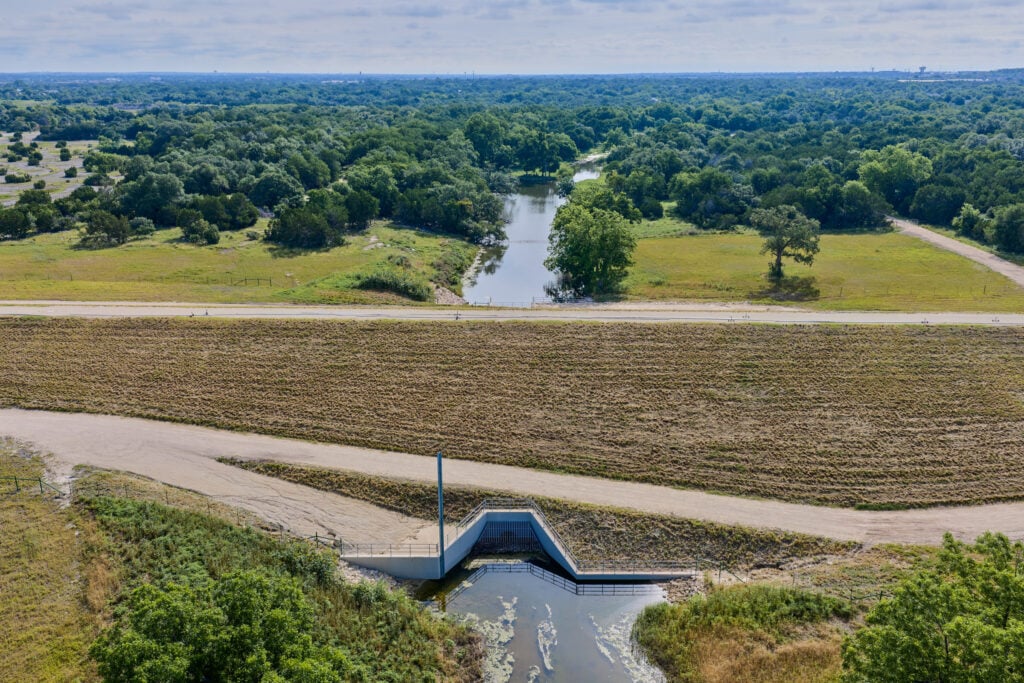
New dam, high stakes: Upper Brushy Creek Dam
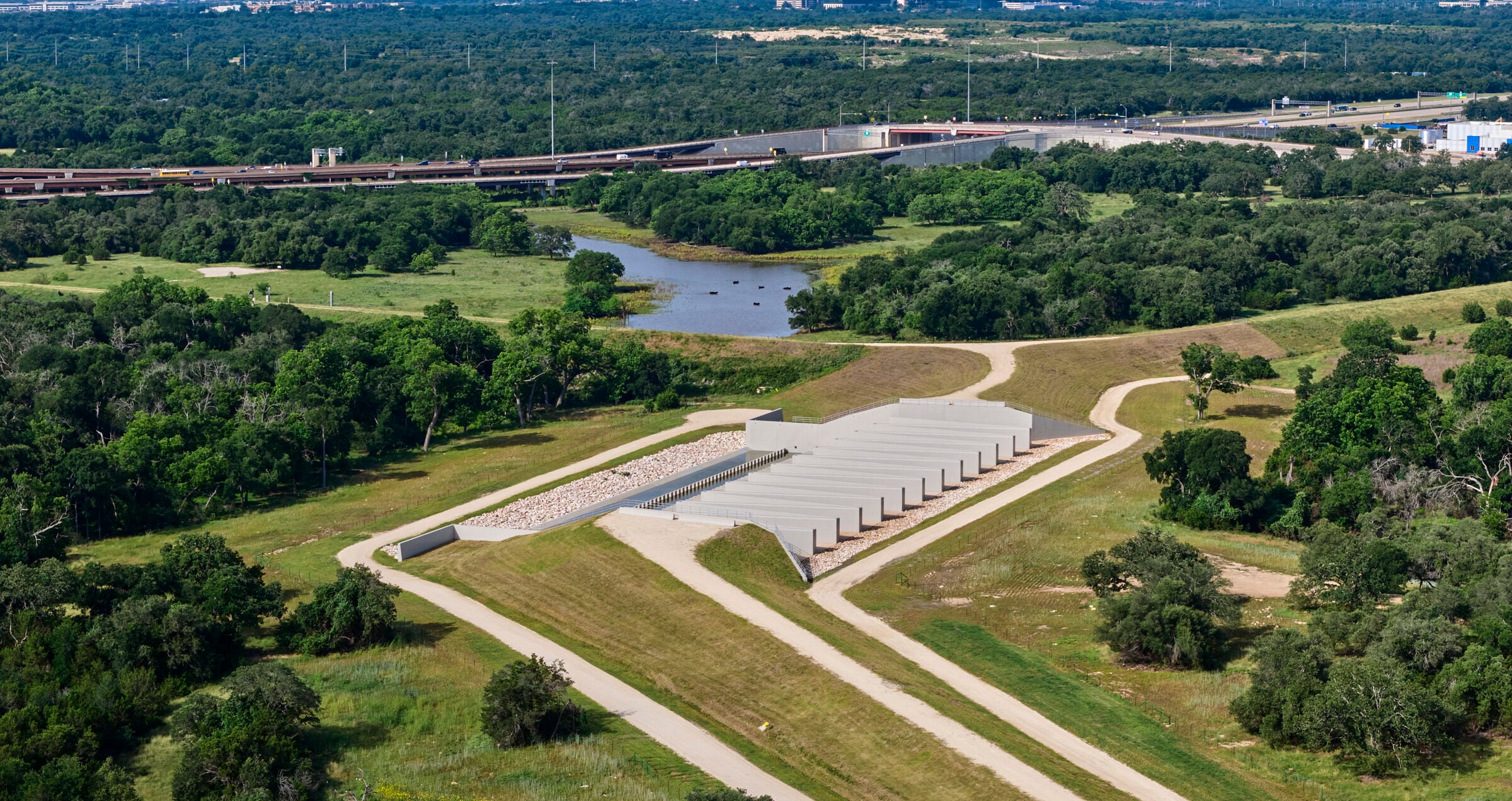
Sundt built the Upper Brushy Creek Water Control and Improvement District (WCID) Dam 101 Project in Williamson County, Texas from the ground up as part of the Lake Creek Flood Mitigation projects. It provides a majority of the flood mitigation for over 1,000 local residents. The one-mile-long, four-story earth embankment dam includes a principal spillway and auxiliary spillway; it improves emergency access and response times to the area by reducing flood risk at multiple road crossings.
During construction, water management drove major decisions. The team calculated the water capacity a temporary basin could hold, how quickly crews needed to pump it out, and what level of storm event the system could handle.
“Our teams create a safety management plan, a quality management plan, and a project management plan for all our jobs. But when it comes to building dams, your safety management plan has a totally different realm of safety considerations that you have to take into account,” said Okruhlik.
The safety plan included pumps, a required drawdown window, a backup route that could send water through an emergency bypass without damaging active work. The plan also called for a two-foot freeboard safety factor, meaning the top of the dam was two feet higher than the 100-year flood level determined by the Federal Emergency Management Agency (FEMA).
The engineering firm, AECOM, presented a white paper at the U.S. Society of Dams Annual Conference on the adaptive construction techniques used by the team. “The project had unique geologic conditions, construction features, and site-specific challenges. The project was successful due to proactive and open communication from Sundt and the field staff, contractor fabricated equipment, adaptive construction techniques, and groundwater and stormwater controls.”
Precision for every layer
Unlike traditional embankments, dam construction demands strategic engineering to work as a single system and specific requirements through every layer of the structure.
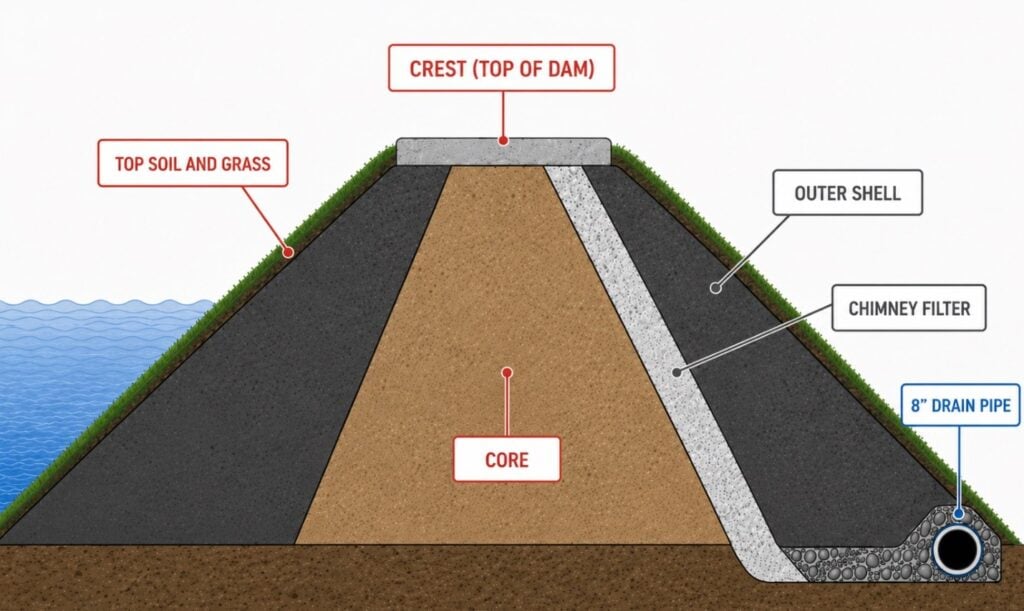
For Sundt, our self-perform earthwork and concrete capabilities gave the team direct control over quality, sequencing, and execution. On a complex dam project, this helped the project stay on schedule and ensured quality met our above-industry standards.
Precision shaped the team’s approach across the project scope. Sundt used drones and modeling tools to study the site, identify risk, and plan temporary cofferdams. The preparation paid off during a 100-year heavy rain in the summer of 2025 that caused flash floods and peaked at 20.33 inches in some parts of Central Texas. Crews pumped around the clock and protected the work area and surrounding communities from flooding.
“We can’t control the weather of course, but we can control our plan to deal with it and the safety measures we put in place,” said Fuss.
The Upper Brushy Creek Dam 101 was completed in the spring of 2026.
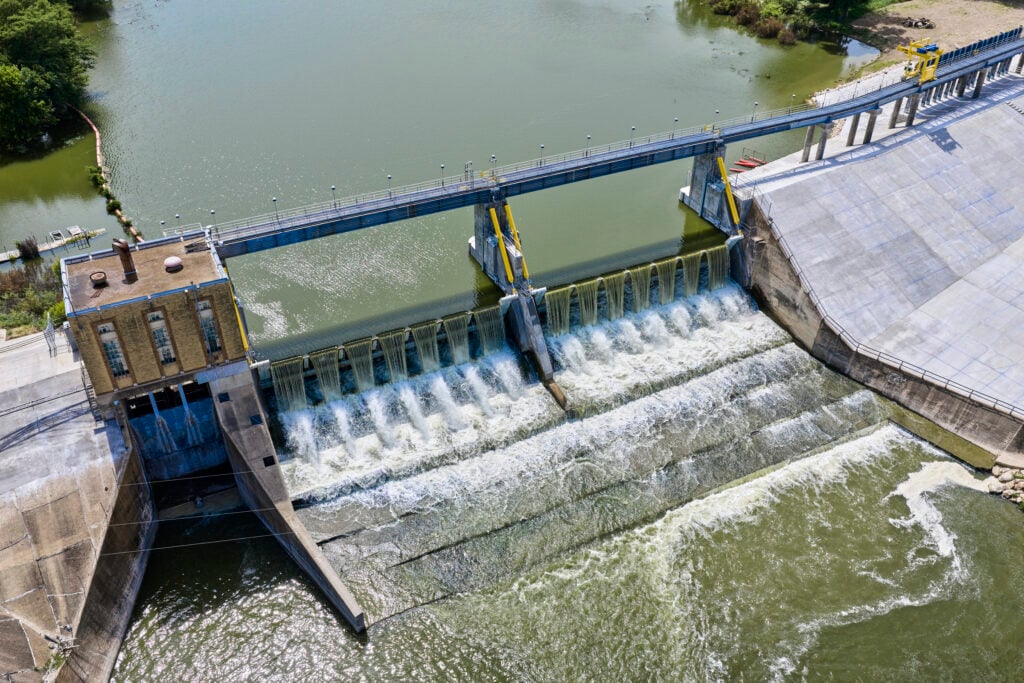
Old dams, new demands: GBRA Lake Placid and Lake McQueeney
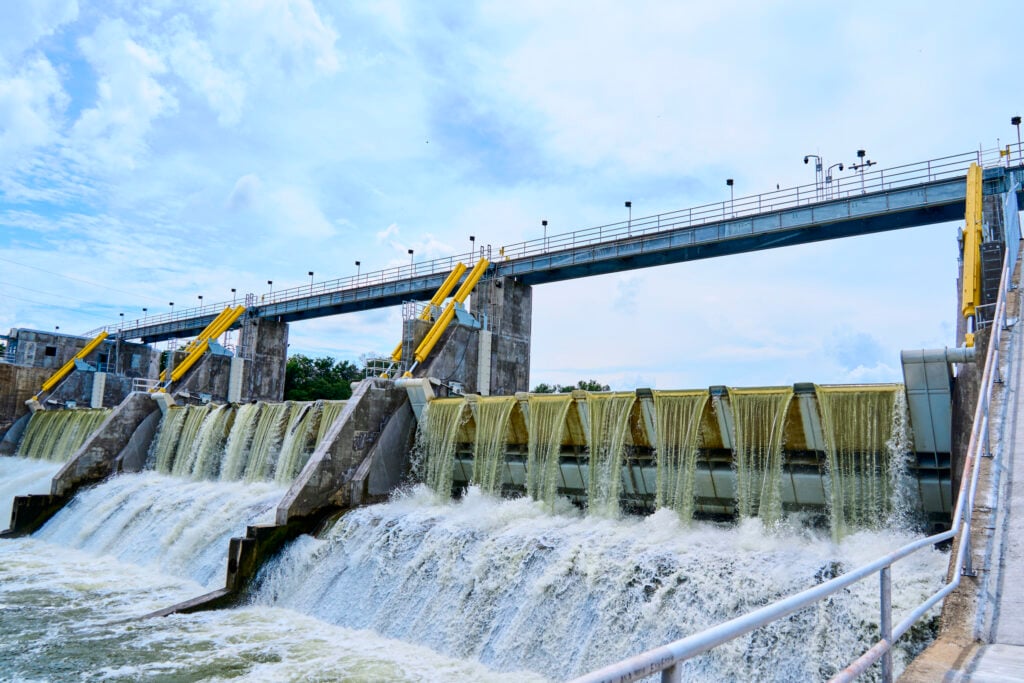
Built in the late 1920s, the Lake Placid and Lake McQueeney dams have served communities in Guadalupe County for almost a century. Located on the Guadalupe River near Seguin, Texas, the community’s desire for continued recreational benefits and the hydroelectric generation from these aging dams led to the need for modernization and rehabilitation. A unique challenge of the project was the need to manage the continuous flow of the Guadalupe River through both sites for the duration of the project, requiring careful planning and sequencing of the work to maintain river flows while constructing the new spillgate systems.
The Guadalupe-Blanco River Authority (GBRA) chose Sundt to rehabilitate the dams into modern facilities. The new spillgate system consisted of hydraulically actuated crest gates that are used to impound water and regulate flow through the dams. Although this project did not involve upgrades to the hydroelectric systems, the new spillgate system allowed the reservoirs to refill to a level for recreational use and allowed hydroelectric power generation to resume.
At Lake Placid and Lake McQueeney, access itself became a project within the project. Before crews could build permanent structures, they had to build the means to reach it.
“The amount of temporary infrastructure that we had to build just for access to get to the permanent work was a challenge, and we had to maintain river flow the entire time,” said Project Manager Clinton Witherell.
The team built access roads and temporary pile-supported trestles, designed to support two 200-ton cranes and provide access to the work areas over the river.
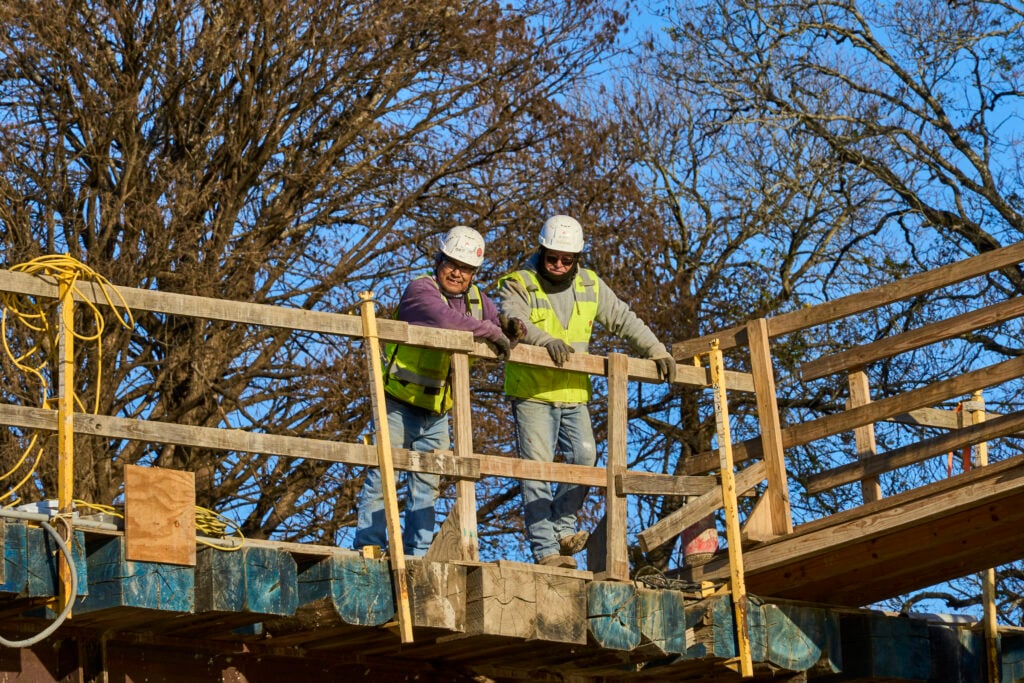
To create dry working conditions where needed, the project called for the construction of temporary cofferdams using sheet piles and steel I-beam walers to isolate the work zones. This approach allowed construction activities to proceed while maintaining continuous water flow through the project.
When working on 100-year-old structures, conditions do not always match plans. During excavation for the new spillway foundation at Lake Placid Dam, crews uncovered an undocumented stream control gate system that was used for the original construction of the dam. This required cooperation with the engineer to resolve conflicts and safely build the planned waler system. At Lake McQueeney, an existing secondary spillway slab was discovered. This slab required demolition and modifications to the planned connection details. Additional rebar dowels were designed and installed to tie the new construction into the existing structure and provide support for the hinge anchor system associated with the new crest gate installation.
Both Lake Placid Dam and Lake McQueeney Dam were completed in the spring of 2026, and the lakes reached normal elevation in April of 2026.
The power of partnership between clients and an experienced team
Sundt’s skilled builders use models, field data, and internal subject matter experts to solve challenges early and bring solutions to the client.
“We’re there to partner. We’re part of making this successful,” said Fuss.
Clients need a builder who identifies risk and a path through to success. The expertise that only comes from a history of successful dam projects. Crews with the ownership mindset and a culture of taking challenges head-on. For Sundt, a project is more than a job; it’s a partnership and promise to improve the lives of people in the community.
Learn more about Sundt’s approach to flood control and dam construction.