Building 104 bridge columns and four new flyovers over I-10 in El Paso, Texas started with a duct tape mock-up on the warehouse floor.
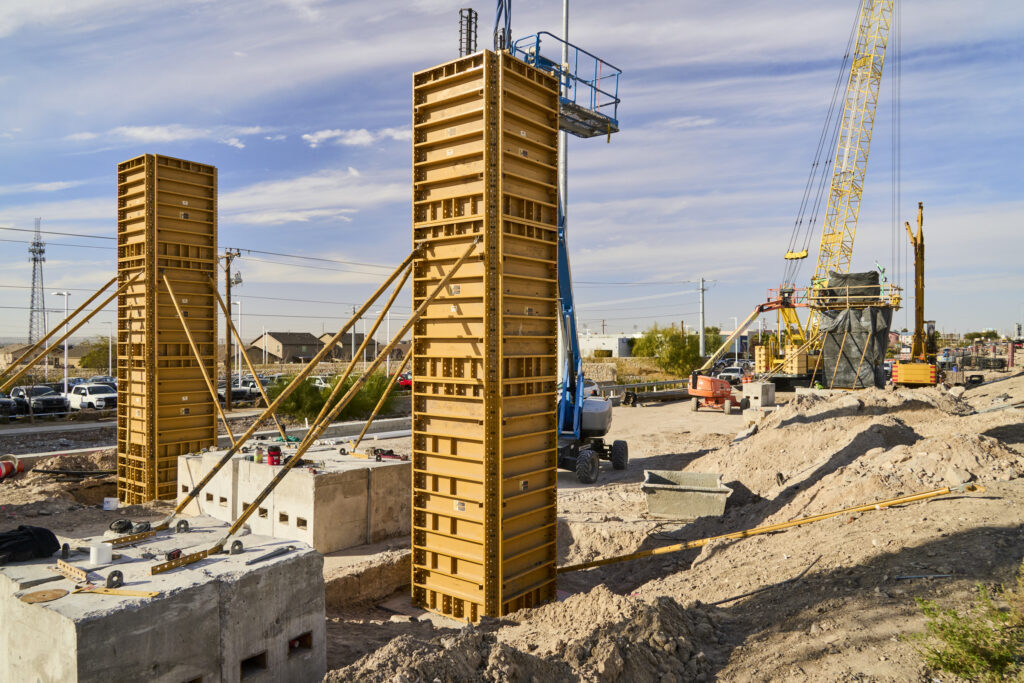
Fifty-five feet down the inside of a bridge column, Sundt Project Engineer Josh Del Toro and another crew member stand in a nine-foot by five-foot space, about the size of a ping-pong table, as concrete pours in.
An El Paso native, Del Toro knows the area well. With 10 years’ experience in construction, he knows concrete. This is the first time he’s ever done anything like this. He feels calm, prepared.
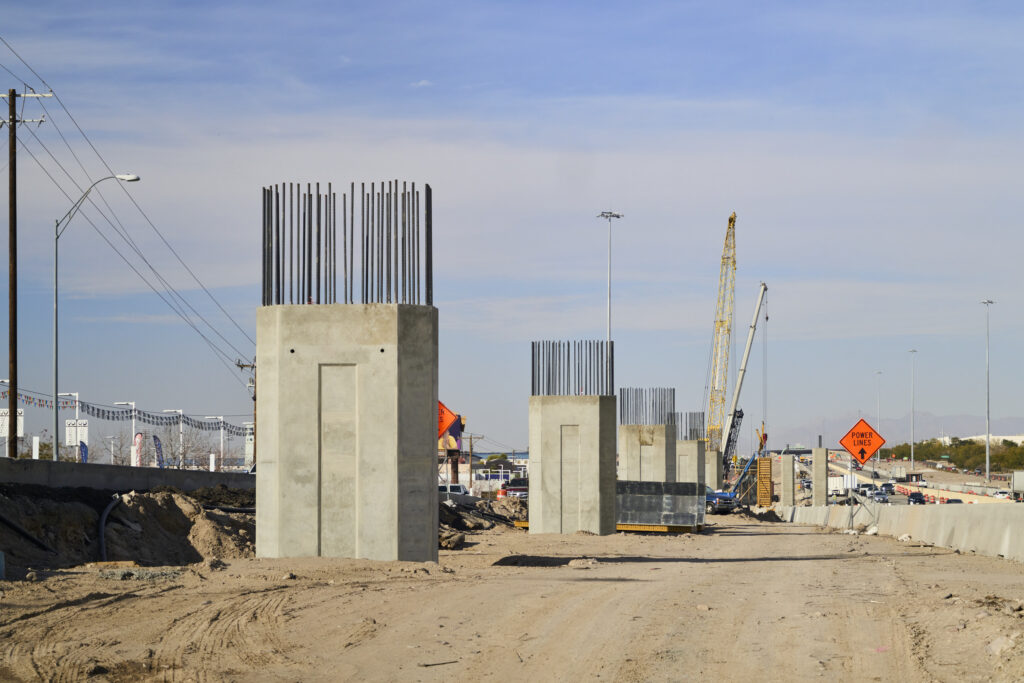
The Texas Department of Transportation SH 178 Artcraft Road Improvements project will add four flyover roads that cross six lanes of I-10 to connect the interstate highway with Artcraft Road.
The finished connections will improve traffic flow through a busy part of El Paso, near a port of entry at the U.S. and Mexico border. Those direct connectors require 104 mast-placement columns, some as tall as 55 feet.
The challenge was not simply getting concrete to the top of a tall form. The team needed to place it from the bottom up, consolidate it with a vibration tool as the form filled, and make sure employees could work safely from inside the column. The team did not wait until the forms stood above the highway to see if it could be done. They got duct tape.
Make the plan and stick to it
Instead of relying only on drawings, Del Toro, his superintendent, and the crew created a full-scale template with the exact column geometry out of duct tape on the floor of a warehouse.
This allowed the team to walk through the column footprint, measure clearances, and practice before anyone climbed into a form. The team identified potential pinch points and congestion areas. They did run-throughs of the rescue and emergency response plans for the tight area.
“From a safety aspect, we had to devise some means and methods to get them in and out. But also, we had to make sure they could work in the tight space,” said Project Manager Joe Hernandez.
This gave the craft professionals going in the column, supervisors, and safety personnel a chance to participate directly in the planning. They measured the space, walked the intended paths, and discussed how the work would go.
The mockup confirmed the plan would work and gave the crew confidence.
Inside the column
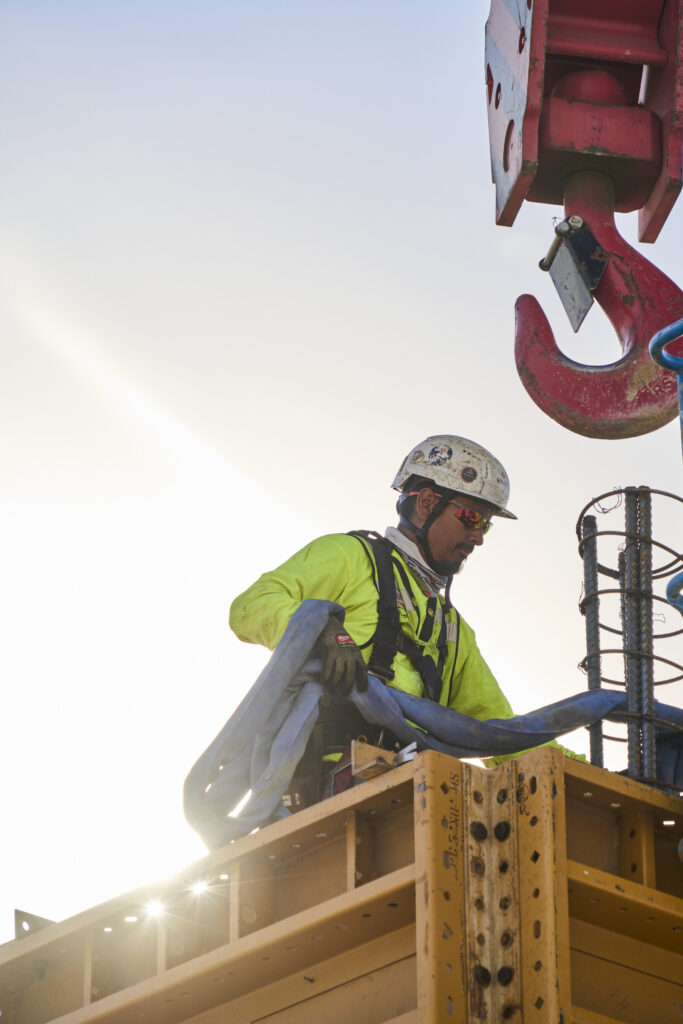
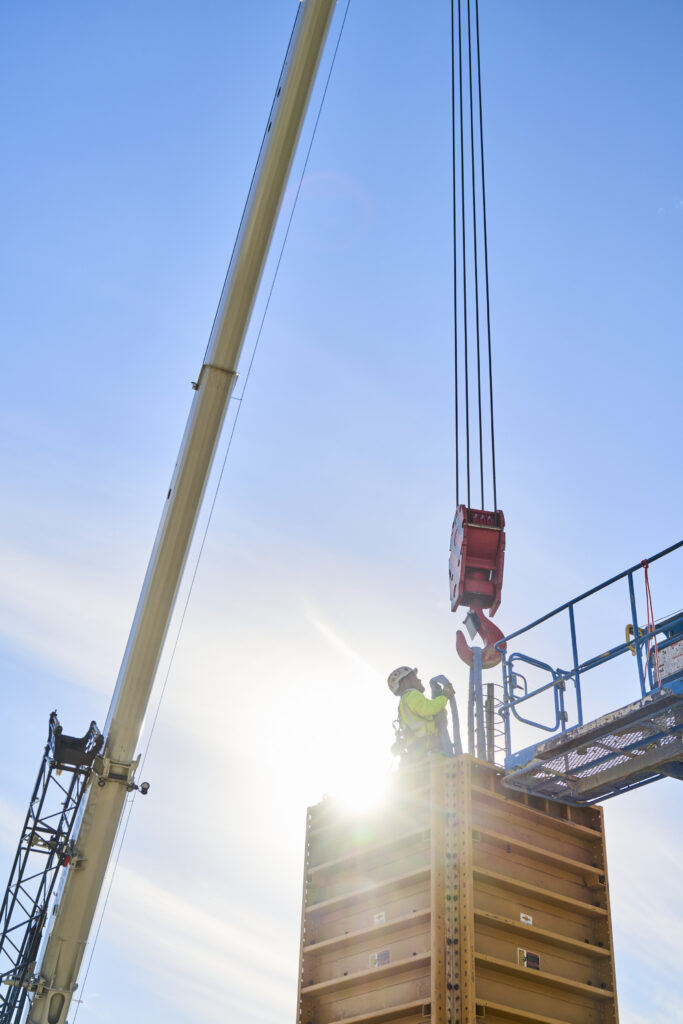
It takes a four-person team to construct each column, two inside and two at the top. The crew inside the column uses a metal vibration tool to consolidate the concrete as it fills the form from the bottom up. This process removes any voids in the concrete that could compromise the stability of the column.
Each employee-owner entering the column wears protective gear, including a harness connected to a winch system attached to the top of the metal formwork. Blowers move fresh air through the form, and each person wears a personal air monitor to alert the crew to fumes or low oxygen levels. If a crew member on the column becomes incapacitated, the team above can activate the winch and retrieve them without entering the column themselves.
The team can place and consolidate about seven feet of column every hour. A 55-foot column takes a full day.
“We’re working on all four bridges that will go over I-10 at the same time. Each bridge in a different phase in an alternating sequence. It’s like a little ladder. We’re just following each other all through the project,” said Del Toro.
Lessons in the art and craft of concrete
A major transportation project like this does more than help traffic flow. It builds the people doing the work. Hernandez guided Del Toro and the team as they took the lead on a challenging project. From planning and mock-up to one success and another. Hernandez called it one of the most rewarding parts of managing the job. “Josh [Del Toro] has accepted every challenge that’s thrown his way, he and the team have done a hell of a job,” said Hernandez.
“Once you see the final product, man, it’s a great feeling. From planning, doing the mock-up. And then out in the field, building it up, and seeing your product finally being installed, it feels good,” said Del Toro.
The team has completed caps and columns for the first phase of the main bridge and has started setting girders and placing decks. Seventy of the project’s 104 mast-placement columns have been placed.
Estimated completion of core structural work is summer 2027.