Sundt’s HS&E Team was inspired by the capabilities of AI to create tools that could improve the quality and consistency of their work.
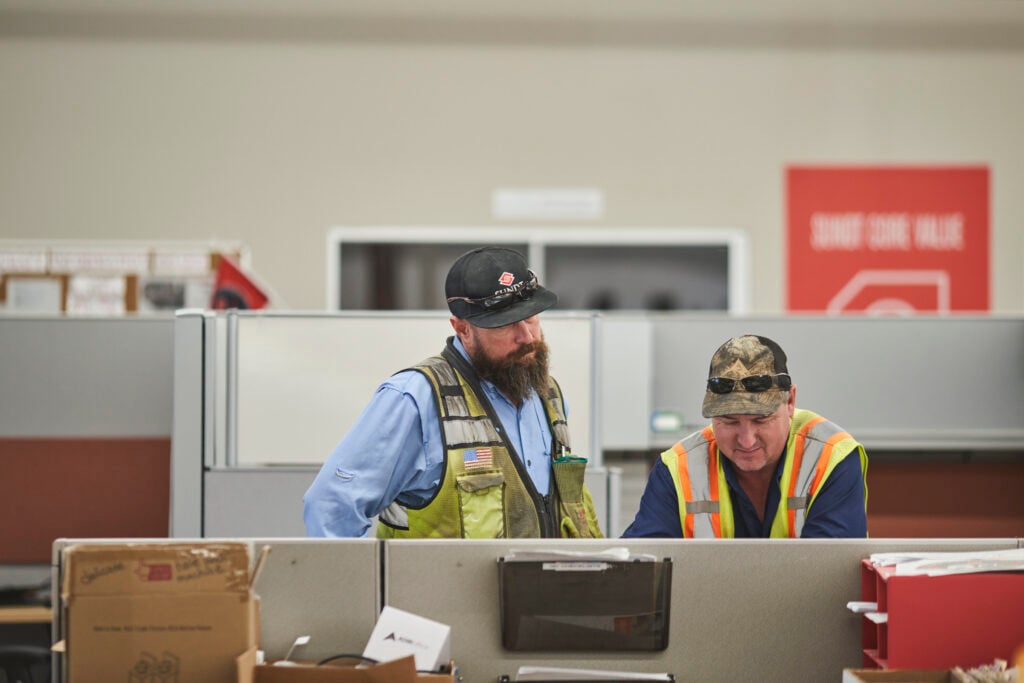
“Traditional internet searches for regulatory and safety information take significant time, and the results are not consistent or immediately credible,” said Omar Percy, Group HS&E Manager. “We saw an opportunity to give our team faster access to trusted guidance so we could spend more time applying our expertise and supporting project teams.”
The HS&E team created Manny and IDA to help optimize the way HS&E personnel work. This use of AI technology gives our HS&E professionals another tool to help prevent incidents and keep jobsites safer. Manny AI is Sundt’s custom Generative Pre-trained Transformer (GPT) used to look up safety regulations. Our Incident Description Assistant (IDA) is another custom GPT that helps format and edit safety incident descriptions to create more accurate reports.
What’s a Custom GPT anyway?
Custom GPTs are tailored chatbots that are equipped with specific manuals, templates and instructions, enabling them to directly answer questions based on that information. This allows the system to reference the exact materials users rely on and quickly provide detailed answers. Using these tools saves employee-owners time digging through search engines or 100-plus page manuals to find answers to time-sensitive questions.
Additionally, the GPT’s knowledge of approved guidance and reference materials helps teams quickly review safety information so they can better devise solutions together.
“It can help you strategize, as it can quickly provide additional information and perspectives to consider so we can make the best safety decision,” said Percy. “It helps get the gears turning.”
Meet Manny, the manual master
Manny AI is designed to answer site-specific safety questions using pre-loaded OSHA manuals, the latest regulatory updates and guidance from trusted .gov and .edu sources. When a safety question arises on site, users can ask Manny a question and it will give them an answer pulled directly from previously uploaded manuals or approved websites. The text-based chat feature saves time, pinpointing exact updates to rules and regulations.
“We just had our corporate HS&E team meetings, and we were discussing the new heat stress regulations coming from OSHA,” Percy said. “We were able to ask Manny, ‘What’s the safest way to acclimatize our crews in accordance with these regulations while planning the workday effectively?’ and it helped us map out a solution based on the latest regulatory updates.”
A new incident reporting standard
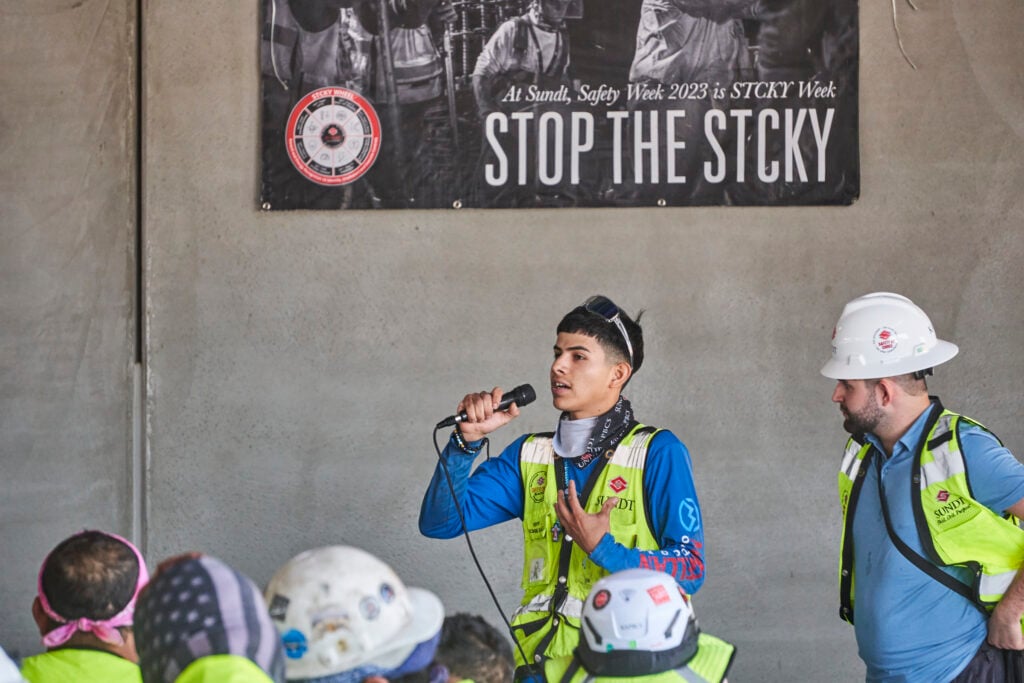
IDA, another custom GPT, helps employee-owners create clear, concise incident descriptions by editing their initial field notes into a consistent, cohesive incident report format before final submission. When a safety incident occurs on site, it gets reported to a safety manager who then writes out what happened in a description. Then, the report goes to a group HS&E manager to formally report and track it. HS&E team members oversaw reviewing, proofreading and editing the nearly 1,739 incident reports that came through in 2025, taking hours each day to do so. A better way to translate field notes into a readable incident report that followed a template was needed.
“We built IDA so instead of manually reviewing and typing up every incident description, the reviewer can paste the safety manager’s report into the tool, and it automatically reformats it to match our standard template. From there, we simply add it to the incident report,” said Percy.
Writing incident reports which follow a standard format helps teams understand and track safety trends. Making sure they are easily readable and contain all pertinent information improves trend analysis, lessons learned and organizational best practices, ultimately improving company-wide safety approaches. HS&E team members can now focus time previously spent editing on thinking through decisions that make work in the field safer.
On the cutting edge of safety innovation
In line with Sundt’s mission to be the most skilled builder in America, it’s critical our teams are using the most modern tools available. In the same ways we’ve upgraded equipment from shovels to excavators and upgraded plans from paper to digital blueprints, staying on top of AI trends and using them to our advantage creates more efficient ways to build.
“We’ve been right in lock step with building data centers, semiconductor chip manufacturing facilities, and other advanced tech facilities. Now, we’re talking about innovation in the context of the new industrial revolution: AI and robotics,” Percy said. “It’s difficult to know when you’re in one of those impactful historical moments but, with AI, we’re certainly in one now.”